
What Do Fish Eat? A Complete Diet Guide
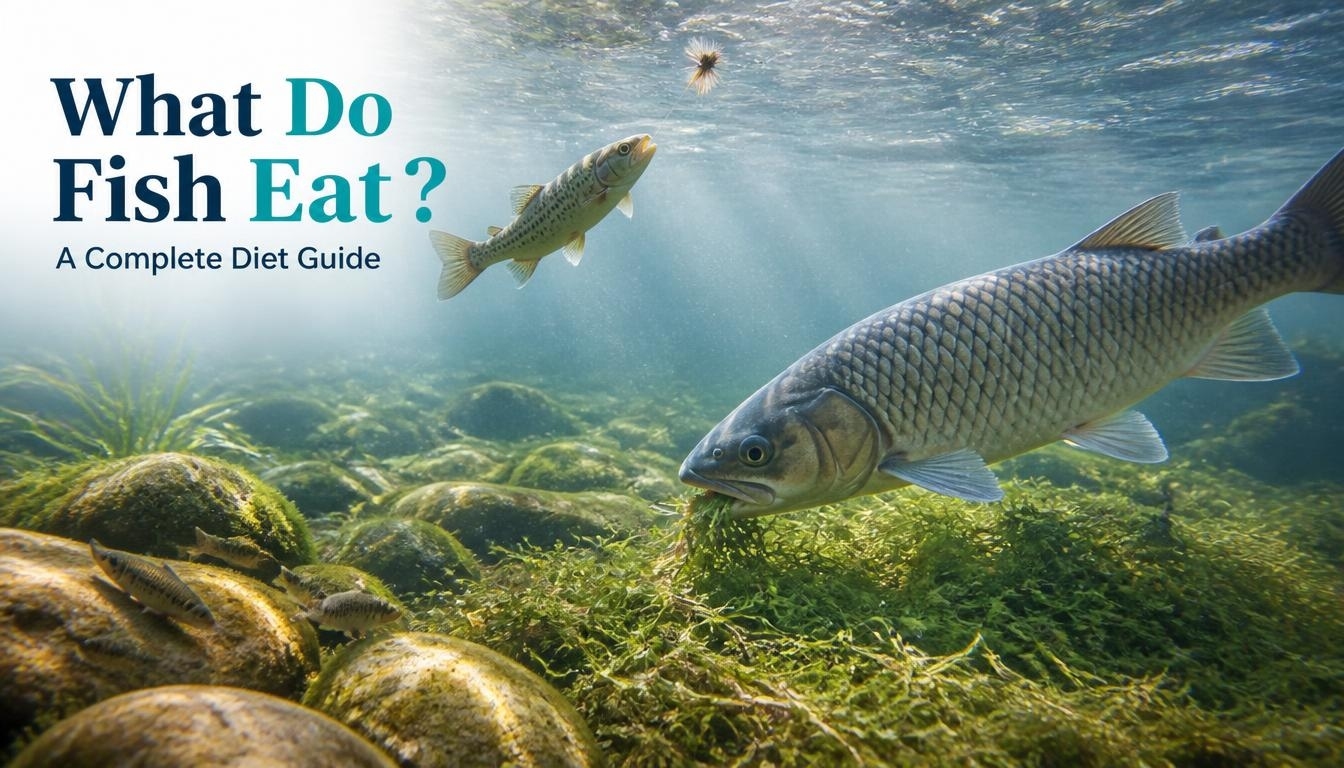
What do fish eat? The short answer is almost anything that fits in their mouth and keeps them alive. The long answer depends on the species, the water they live in, and even their age. A grass carp grazing on pond weed, a trout snapping at insects, and a tiny guppy picking at algae all have very different menus.
With more than 35,000 known species, the food of fishes ranges from microscopic plankton to crabs, seeds, rotting plant matter, and other fish. Understanding what does fish eat in each setting, whether a river, a farm pond, or a home tank, helps you feed fish properly, keep them healthy, and avoid mistakes that waste money and kill fish. This guide covers the main diet types, wild feeding habits, what small fish eat, what farmed fish are fed, and safe alternatives to packaged fish food.
What Do Fish Eat? The Main Diet Types
Biologists group fish by what they eat. Knowing the group tells you most of what you need to know about a species’ diet, gut, and feeding behavior.
Diet type | What they eat | Examples |
Herbivores | Algae, aquatic plants, seeds | Grass carp, parrotfish, plecos |
Carnivores | Fish, insects, crustaceans, mollusks | Pike, tuna, trout, barracuda |
Omnivores | Both plant and animal matter | Common carp, tilapia, goldfish, guppies |
Planktivores | Phytoplankton and zooplankton | Catla, silver carp, anchovies, whale shark |
Detritivores | Decaying matter and debris on the bottom | Mrigal, mullet, some catfish |
Herbivorous fish
Herbivores graze on algae, soft aquatic plants, and sometimes fruit or seeds that fall into the water. They usually have long intestines because plant material is harder to digest. Grass carp, widely stocked in ponds to control weeds, are a classic example, and plecos are a familiar aquarium one.
Carnivorous fish
Carnivores eat other animals: smaller fish, insects and their larvae, shrimp, crabs, snails, and worms. Predators such as pike and barracuda hunt other fish, while trout feed heavily on insects and small crustaceans. They typically have sharp teeth, strong jaws, and short digestive tracts, and they need a protein rich diet.
Omnivores, plankton eaters, and bottom feeders
Most commonly kept and farmed fish are omnivores. Common carp and tilapia eat plants, insects, worms, and organic debris. Plankton eaters such as catla and silver carp strain tiny organisms from the water, and detritivores such as mrigal and mullet feed on decaying matter and debris on the bottom.
Food of the Fish in the Wild
So what do fish eat in the wild? They eat what their habitat offers, and most are opportunistic, shifting their diet with the seasons and as they grow.
Rivers, lakes, and ponds
Freshwater fish feed on insect larvae, worms, snails, small crustaceans, algae, aquatic plants, and smaller fish. Insects, seeds, and fruit that land on the surface are also taken. Bottom dwellers root through mud for detritus and small invertebrates.
Oceans and seas
Marine food webs start with phytoplankton. Zooplankton and krill feed on them, small fish such as sardines and anchovies feed on zooplankton, and larger predators such as tuna and mackerel eat those small fish and squid. Some giants, including whale sharks, filter plankton directly from the water.
Feeding zone and mouth shape
Fish also divide up the water. Surface feeders have upturned mouths for insects that land on the water, mid water fish take plankton and drifting food, and bottom feeders have downturned mouths and often barbels to find food in the mud. Jaw shape, teeth, and gut length all point to a diet, which we cover in our guide to internal and external fish anatomy. For more surprising feeding habits, see these fun facts about fish.
Diet also changes with life stage and season. Young fish usually start on zooplankton and tiny insects, then move to larger prey or plants as they grow, which is why one species can eat very differently as a juvenile than as an adult. When insects hatch in spring and summer, many fish feed heavily on them, and when food gets scarce or the water turns cold, they eat less and rely on stored fat.
What Do Small Fish Eat?
What do small fish eat depends on whether you mean baby fish (fry) or small adult species such as guppies, minnows, and tetras.
Fry and baby fish
Newly hatched fry live off their yolk sac for the first few days. Once it is used up, they need food small enough to swallow: infusoria or green water first, then rotifers, microworms, and freshly hatched brine shrimp, then finely crushed flake or powdered fry feed. In the wild, fry eat zooplankton and algae.
Small adult fish
Small adult fish are mostly omnivores or small insect eaters. In the wild they eat insect larvae, including mosquito larvae, tiny crustaceans such as daphnia, algae, and fallen insects. In a tank, they do well on quality flakes or micro pellets, supplemented with daphnia, brine shrimp, or bloodworms. Feed small amounts, because tiny stomachs fill quickly. If you are choosing your first species, our list of beginner aquarium fish and their food habits shows what each popular fish eats.
What Do Farmed Fish Eat?
Farmed fish eat a mix of natural food and prepared feed, depending on the system. How much feed matters depends on how intensively the fish are raised, which we explain in our guide to types of fish farming systems.
Natural food in ponds
In extensive and semi intensive ponds, farmers add organic manure or fertilizer to grow plankton, which carp, tilapia, and similar species eat directly. Different species use different layers of the pond: catla feeds near the surface, rohu in the middle, and mrigal and common carp near the bottom, which is why they are often stocked together.
Formulated pellets
In intensive farms, fish rely mostly on formulated pellets made from fishmeal, fish oil, soybean meal, grains, vitamins, and minerals. Carnivorous species such as trout and salmon need roughly 40 percent protein or more in their feed, while carp and tilapia do well on around 25 to 35 percent. Pellets are made to float or sink depending on where the species feeds, and farmers usually feed a small percentage of body weight per day, adjusted for water temperature and fish size. For a behind the scenes look, read how fish farms actually operate.
What Can Aquarium Fish Eat Besides Fish Food?
Packaged flakes and pellets are convenient, but variety improves health and color. Many fish also accept fresh and frozen foods, as long as they suit the species’ diet.
Safe options
• Blanched vegetables such as zucchini, cucumber, spinach, and shelled peas for herbivores and omnivores
• Live or frozen bloodworms, daphnia, and brine shrimp
• Small pieces of cooked shrimp or fish for carnivores
• Algae wafers or spirulina for plecos and other algae eaters
Foods to avoid
Bread, crackers, and processed human food swell, foul the water, and lack the nutrients fish need. Salty, spicy, or oily foods and meat from land animals such as beef or chicken are hard for fish to digest. Remove anything uneaten after a few minutes. For a deeper look at balanced menus, see our guide to healthy food for aquarium fish.
Common Feeding Mistakes to Avoid
Even experienced keepers and farmers slip up here. These are the errors that cause the most trouble:
• Overfeeding: the most common mistake. Feed only what your fish finish in two to three minutes.
• Wrong food for the species: a carnivore fed only plant flakes, or a herbivore fed only meaty food, will slowly decline.
• Ignoring temperature: fish are cold blooded, so appetite drops in cold water. Feed less in winter and cool conditions.
• Poor storage: damp or stale feed loses vitamins and can spoil. Keep it sealed and dry, and use it within a few months of opening.
• No variety: relying on one food for years can leave gaps in nutrition.
Frequently Asked Questions
What do fish eat in the wild?
Wild fish eat whatever their habitat provides. Depending on the species, that means algae and plants, plankton, insects and their larvae, worms, snails, crustaceans, or other fish. Most species are opportunistic and change what they eat with the season and as they grow.
Do all fish eat the same food?
No. Fish are grouped as herbivores, carnivores, omnivores, planktivores, and detritivores, and each group needs a different diet. Even within one species, young fish often eat different foods than adults, so feeding should match both the species and the size of the fish.
What do farmed fish eat?
Farmed fish eat natural pond food such as plankton, supplementary feed, or complete formulated pellets, depending on the system. Intensive farms use pellets made from fishmeal, plant proteins, oils, vitamins, and minerals, while pond systems often rely partly on plankton grown through fertilization.
What can fish eat besides fish food?
Many fish accept blanched vegetables such as zucchini, cucumber, and peas, along with live or frozen foods such as daphnia, brine shrimp, and bloodworms. Carnivores can have small pieces of cooked shrimp or fish. Avoid bread, salty foods, and processed human food, and remove leftovers after a few minutes.
What do small fish eat?
In the wild, small fish eat tiny foods such as zooplankton, insect larvae, algae, and daphnia. Baby fish start with infusoria, rotifers, or baby brine shrimp, while small adult fish in tanks do well on fine flakes or micro pellets with occasional live or frozen food.
Conclusion
So, what do fish eat? Everything from algae and plankton to insects, worms, and other fish, depending on the species and its habitat. The best feeding approach is always the same: match the food to the species, its life stage, and its setting, feed small amounts, and keep the water clean. Want to keep learning? Explore more fish guides and feeding tips on Breeze Fish Point.