Life Stages of Salmon: Eggs, Fry, Smolt, and Adult
The salmon fish life cycle can seem complicated because salmon change greatly as they move through different habitats. From tiny eggs buried in a riverbed to powerful adults returning to spawn, every stage has a specific purpose. Understanding these stages makes it easier to see how salmon survive, migrate, grow, and eventually reproduce.
What Is the Salmon Fish Life Cycle?
The salmon fish life cycle is the series of stages a salmon passes through from egg to reproductive adult. Many salmon populations begin life in freshwater, migrate to the ocean as juveniles, and later return to freshwater to reproduce. Some populations remain in freshwater throughout their lives.
The exact timing varies by salmon species and environment, but the basic sequence is:
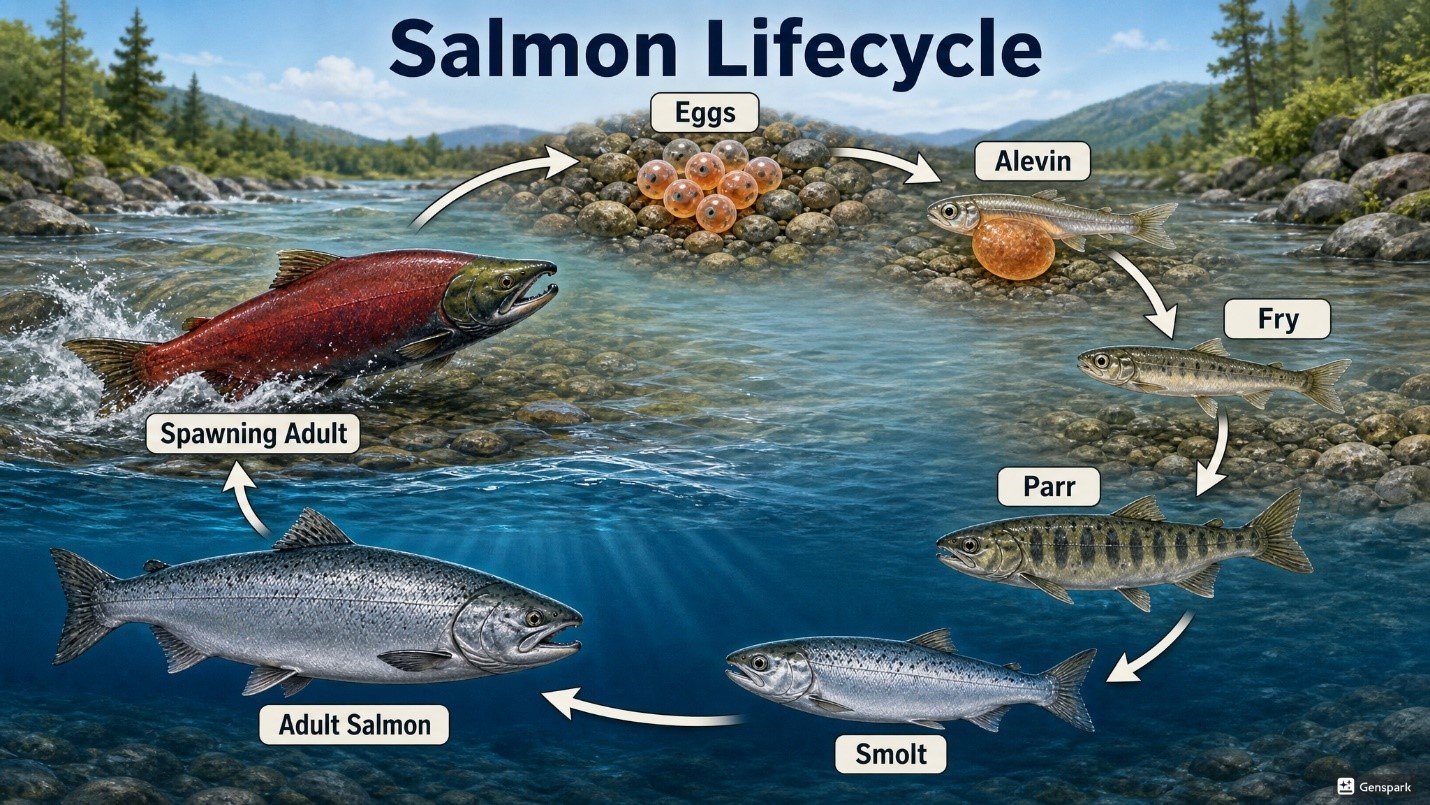
The main developmental stages are egg, alevin, fry, parr, smolt, and adult, followed by spawning, which begins the next generation.
Some species have slightly different patterns, but this sequence provides a useful way to understand the lifecycle of salmon.
1. Egg: Where the Salmon Life Begins
Salmon eggs are laid in freshwater, usually in gravel nests called redds. The female creates a depression in the gravel, deposits her eggs, and covers them with additional gravel after fertilization.
The eggs remain protected among the stones while the embryos develop. Clean, well-oxygenated water flowing through the gravel is especially important during this stage.
Several environmental factors can affect egg survival, including:
- Water temperature
- Oxygen availability
- Sediment covering the gravel
- Flooding or changes in river flow
- Predation
The egg stage ends when the developing salmon hatches.
What happens after a salmon egg hatches?
The newly hatched salmon is called an alevin. It still carries a yolk sac, which provides most of the energy it needs during this early stage.
2. Alevin: The Hidden Young Salmon
An alevin is a newly hatched salmon that remains beneath the gravel. Instead of immediately swimming into open water, it stays protected while absorbing nutrients from its yolk sac.
Once the yolk sac has been absorbed, the young salmon begins moving toward the surface. It then emerges from the gravel and becomes a free swimming fry.
3. Fry: Learning to Survive
The fry stage begins when a young salmon leaves the gravel and starts feeding independently. At this point, the fish is small but already facing many challenges.
Fry often feed on small aquatic organisms and must find suitable areas with enough food and shelter. River currents, predators, temperature, and competition can all influence survival.
At this stage, survival depends on finding food, avoiding predators, and continuing to grow. It needs to eat, avoid predators, and grow strong enough for the next stage.
4. Parr: The Juvenile Growth Stage
As salmon grow, they develop into parr. Parr are juvenile salmon that typically live in freshwater for a period before migrating downstream.
Many juvenile salmon have darker vertical markings called parr marks, which help distinguish them from their later appearance.
During this stage, the young salmon continue feeding and growing in freshwater.
The length of the freshwater juvenile period depends on the salmon species and local environment. Some salmon migrate to the ocean relatively quickly, while others remain in freshwater much longer.
5. Smolt: Preparing for the Ocean
The smolt stage is one of the most important transitions in the salmon fish life cycle. A smolt is a juvenile salmon that is physiologically preparing to move from freshwater into saltwater.
During smoltification, the fish undergoes physical and physiological changes that help it cope with the very different conditions of the ocean.
Smolts often become more silvery in appearance and begin migrating downstream.
Interesting Fish Facts About Trout
Why is the smolt stage important?
Before entering seawater, juvenile salmon undergo changes that help their bodies manage the different salt levels. Smoltification helps prepare its body for the changes in salt concentration and other conditions it will encounter during marine life.
The smolt stage marks the transition from freshwater life to life at sea.
6. Adult Salmon: Growth in the Ocean
After reaching the ocean, salmon enter the marine phase of their lives. They feed and grow, sometimes traveling considerable distances depending on the species.
The ocean can provide rich feeding opportunities, allowing many salmon to grow considerably before returning to freshwater.
The adult stage is not simply about becoming larger. The salmon is also building the energy reserves needed for migration and reproduction.
7. Returning to Freshwater to Spawn
When an adult salmon reaches reproductive maturity, it begins its return migration toward freshwater spawning grounds.
Many salmon are famous for returning to the river systems where they originated, Salmon use several natural cues to navigate, including their sense of smell when they approach freshwater.
The journey can be demanding. Salmon may travel upstream through strong currents and, in some species, navigate around waterfalls and other obstacles.
Once they reach suitable spawning habitat, females create redds and release eggs while males release sperm to fertilize them.
The cycle then begins again.
How Do Salmon Change During Their Life Cycle?
The major stages involve significant changes in habitat, appearance, behavior, and physiology.
Life stage | Main habitat | Key feature |
Egg | Freshwater gravel | Embryo develops inside the egg |
Alvin | Gravel | Feeds from yolk sac |
Fry | Freshwater | Begins independent feeding |
Parr | Freshwater | Juvenile growth and development |
Smelt | River to ocean | Adapts to saltwater |
Adult | Ocean and freshwater | Grows, migrates, and reproduces |
The table shows how salmon can adapt to very different conditions as they move through their life cycle.
What Can Disrupt the Salmon Life Cycle?
Salmon depend on connected habitats throughout their lives. A problem in one part of the journey can affect later stages.
Common pressures include:
- Poor water quality
- Excess sediment in spawning gravel
- High or unusually low water temperatures
- Barriers that interfere with migration
- Habitat loss
- Changes in river flow
- Ocean conditions that affect food availability
Protecting salmon therefore requires more than protecting one location. Rivers, streams, estuaries, and marine habitats can all play a role in supporting healthy salmon populations.
FAQs
How long does the salmon life cycle take?
It varies by species and environment. Some salmon complete their life cycle in a few years, while others spend longer periods in freshwater or the ocean before reaching maturity.
What is a salmon fry?
A fry is a young salmon that has absorbed its yolk sac and begun feeding independently. It generally lives in freshwater during this early growth stage.
What is the difference between a parr and a smolt?
A parr is a juvenile salmon adapted to freshwater life. A smolt is a later juvenile stage that has undergone changes preparing it to enter saltwater.
Do all salmon migrate to the ocean?
No. Many salmon populations migrate between freshwater and the ocean, but some remain in freshwater throughout their lives.
Why do salmon migrate?
Migration allows salmon to use different habitats during different stages of their lives. Freshwater provides spawning and early development areas, while the ocean can provide important feeding and growth opportunities.
Why the Salmon Life Cycle Matters
The salmon fish life cycle is a remarkable journey through several connected environments. A salmon begins as an egg in freshwater, develops through the alevin, fry, and parr stages, becomes a smolt, grows in the ocean, and eventually returns to freshwater as an adult to reproduce.
Seeing the entire journey together also explains why salmon conservation is a habitat-wide challenge. Protecting spawning streams alone is not enough if juvenile habitat, migration routes, estuaries, or marine feeding areas are compromised. Understanding each stage helps us understand what salmon need to survive and complete their remarkable journey.