
Pacific Mackerel: Identification, Range & Facts Every Angler Should Know
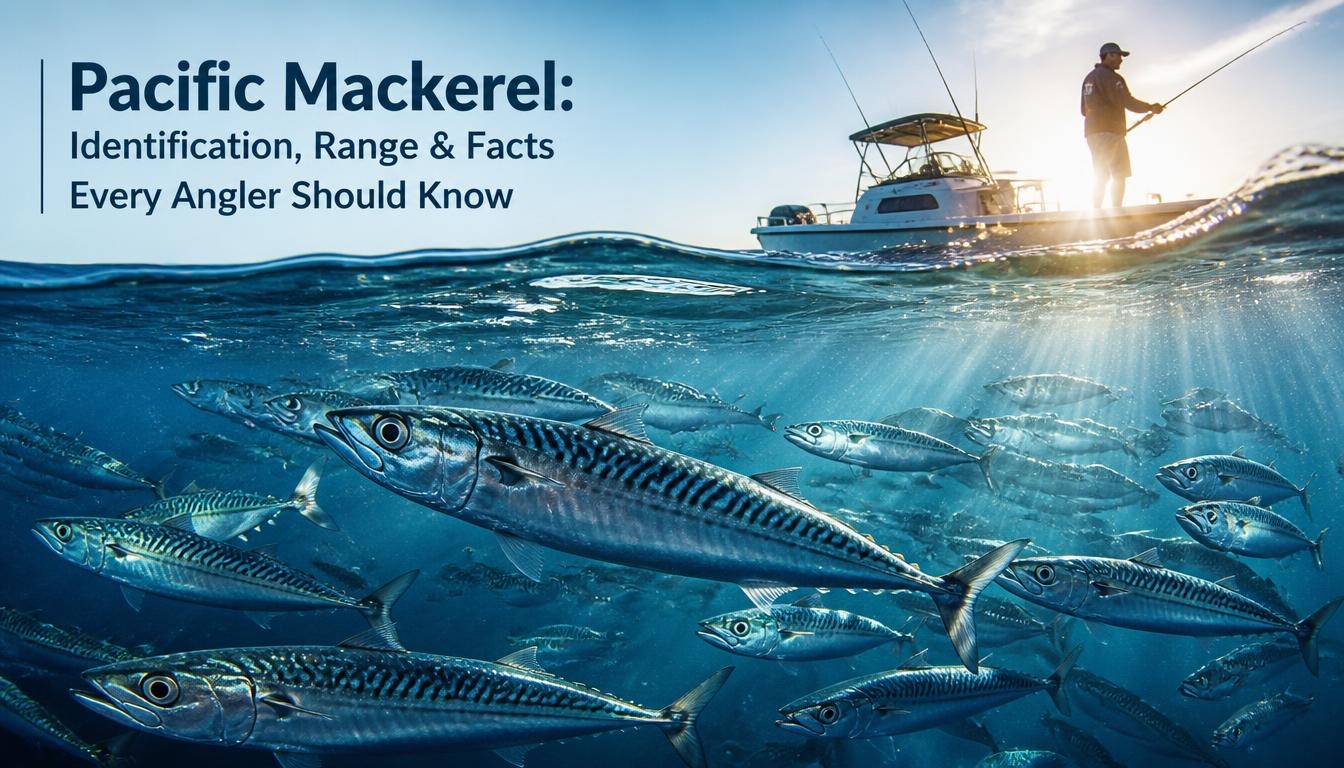
Quick answer: Pacific mackerel is a fast, schooling member of the tuna and mackerel family, identifiable by dark wavy bars across its back and a deeply forked tail, ranging from British Columbia to Chile and most abundant off California and Baja in summer and fall. It hits nearly any small lure or bait, making it one of the most reliable and action packed catches on the West Coast whether you're targeting it directly or it shows up as incidental bycatch while fishing for something bigger.
What Is a Pacific Mackerel?
Scientifically named Scomber japonicus, Pacific mackerel is also called chub mackerel, and it belongs to Scombridae the same family that includes true tuna. It's smaller than its tuna relatives but no less important to the fishery: massive Pacific mackerel schools form a key part of the food web up and down the eastern Pacific, feeding everything from larger gamefish to marine mammals and seabirds. It's currently rated Least Concern by the IUCN and supports a well managed commercial and recreational fishery concentrated in Southern California.
How to Identify a Pacific Mackerel
Body & Markings
The fastest identifier on the water: dark, wavy zigzag bars running across a silvery blue back, fading to bright silver on the belly. The body itself is classic torpedo shaped, built for sustained fast swimming.
Fins & Tail
Two separate dorsal fins run along the back, followed by a row of small finlets between the second dorsal fin and the deeply forked tail the same finlet structure found on tuna, and a reliable way to confirm you're looking at a true mackerel rather than a similar looking species.
Size
Most Pacific mackerel you'll actually catch run half a pound to 2 pounds and 10 to 16 inches, though the species can reach up to roughly 6 pounds at maximum size, with sport caught records pushing close to 7 pounds.
Pacific Mackerel vs Look Alike Species
Two species get mixed up with Pacific mackerel most often one shares its name, the other shares nearly its entire appearance:
Feature | Pacific Mackerel | Jack Mackerel | Atlantic Chub Mackerel |
Family | Scombridae (true mackerel) | Carangidae (jacks) | Scombridae |
Back pattern | Dark wavy zigzag bars | Plain, no bars | Nearly identical wavy pattern |
Finlets near tail | Yes | No | Yes |
Where you'll find it | Eastern Pacific | Eastern Pacific | Atlantic Ocean |
Jack mackerel, despite the name, isn't a true mackerel at all it's in the jack family and lacks both the wavy back pattern and the tell tale finlets. If you're fishing the Atlantic instead and see something that looks nearly identical to a Pacific mackerel, that's likely its close cousin, the Atlantic chub mackerel same genus, different ocean.
Range: Where to Find Pacific Mackerel
Pacific mackerel ranges the entire eastern Pacific coast from British Columbia down to Chile, but the fishery and most of the action anglers see concentrates off California and Baja California, where the species is most abundant.
When and Where to Target Them
Pacific mackerel is an open water schooling species, found anywhere from the surface down to about 300 feet, with a strong preference for water between roughly 60°F and 72°F. As water warms seasonally, mackerel follow it north along the California coast, which is exactly why the fishing is noticeably better off Southern California and Baja in summer and fall than during cooler months timing your trip around water temperature matters more for this species than almost any other detail.
Fishing for Pacific Mackerel
This is about as close to a sure thing as West Coast fishing gets. Pacific mackerel schools hit small lures and bait aggressively and consistently, which makes them a favorite for anglers wanting fast, reliable action and a genuinely useful species to know how to identify quickly, since they show up as incidental catch constantly while targeting other species like rockfish or halibut. Light tackle with small jigs, feathers, or cut bait fished near active schools is typically all it takes. Beyond the sport of it, Pacific mackerel also serves as prime live and cut bait for larger gamefish, making it a genuinely dual purpose catch on many trips.
Management & Regulatory Status
Pacific mackerel falls under the U.S. Coastal Pelagic Species Fishery Management Plan, jointly managed by the Pacific Fishery Management Council and NOAA Fisheries, with California state regulations covering the portion of the fishery in state waters. Current federal specifications set the 2025–2026 season (July 2025 through June 2026) harvest guideline at 9,143 metric tons with an annual catch target of 8,143 metric tons, rising to a 10,448 metric ton harvest guideline for 2026–2027. Once the season's catch target is reached, directed fishing closes for the year, with a small reserve set aside for incidental catch in other coastal pelagic fisheries a structured system that's kept the species at Least Concern status despite an active, ongoing commercial fishery.
FAQ
How do I quickly identify a Pacific mackerel on the water?
Look for a fast, torpedo shaped fish with dark wavy zigzag bars on its back, a silvery belly, and small finlets between the second dorsal fin and the tail.
Is jack mackerel the same fish as Pacific mackerel?
No despite the similar name, jack mackerel is in a completely different family (the jacks, Carangidae) and lacks the wavy back pattern and finlets that identify a true Pacific mackerel.
When is the best time to target Pacific mackerel?
Summer and fall, when warmer water pushes the schools north along the California coast and fishing off Southern California and Baja peaks.
What's the best bait or lure for Pacific mackerel?
Small jigs, feathers, or cut bait fished near an active school Pacific mackerel hit aggressively and rarely need much finesse.
How big does Pacific mackerel get? Typically half a pound to 2 pounds and 10 to 16 inches, with a maximum size around 6 pounds and sport caught records close to 7 pounds.
Is it legal to keep the Pacific mackerel I catch?
Generally yes, within current federal and California state harvest limits under the Coastal Pelagic Species Fishery Management Plan always check current regulations, since seasonal catch targets can close directed fishing once reached.
Is Pacific mackerel a good bait fish?
Yes beyond being a fun light tackle target in its own right, Pacific mackerel is widely used as live and cut bait for larger gamefish along the West Coast.
Conclusion
Pacific mackerel might not be the trophy on most anglers' bucket lists, but between its aggressive, reliable bite, its usefulness as bait, and its role as one of the most important schooling species in the eastern Pacific food web, it's a fish worth knowing how to identify at a glance and worth targeting on a slow day for just about anyone. For more on where and when to fish for it alongside other West Coast species, see our West Coast Fishing guide.