
West Coast Fishing: Where and How to Fish It
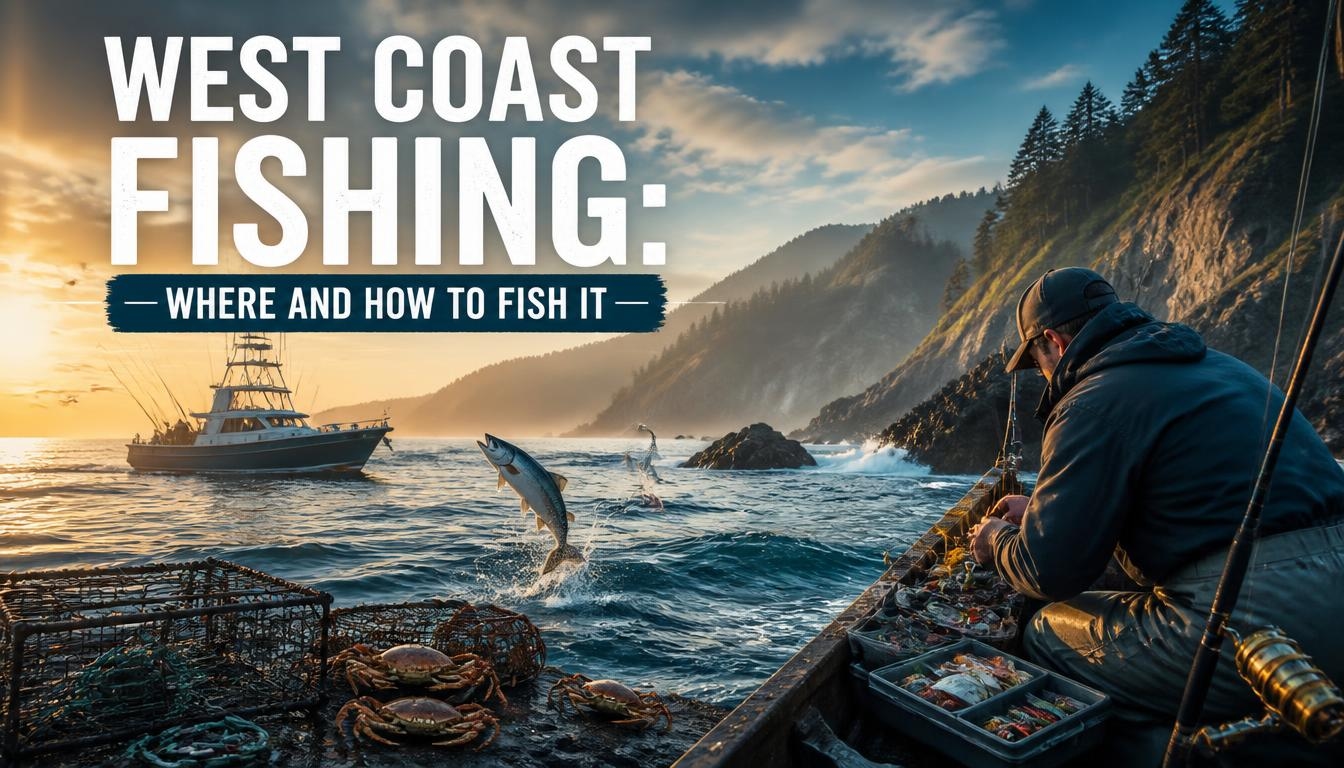
West coast fishing covers an unusual amount of ground for one stretch of coastline salmon trolling off Astoria, deep rockfish drops off Monterey, tuna runs out of San Diego, and Dungeness crab pots from Puget Sound to Northern California. And 2026 is a genuinely big year to be paying attention: California's salmon season just reopened after three straight years closed. Here's what you're actually targeting, where to go, what gear to bring, and what's changed with the regulations.
What Makes West Coast Fishing Different
Unlike a single species fishery, West Coast fishing spans an enormous range of styles within Washington, Oregon, and California offshore trolling for salmon and tuna, deepwater bottom fishing for rockfish and lingcod, inshore bay fishing for striped bass, and shore based options like surfperch and crabbing that need nothing more than a rod or a pot and a pier. Species and seasons are managed jointly through the Pacific Fishery Management Council and NOAA Fisheries at the federal level, layered with state specific rules that can vary sharply even between neighboring management zones.
Species Breakdown: What You're Actually Targeting
Salmon (Chinook & coho): The backbone of West Coast fishing culture, tied directly to freshwater conditions in rivers like the Sacramento, Klamath, and Columbia which is exactly why drought years upstream translate into poor ocean seasons.
Rockfish & lingcod: Dozens of rockfish species live along the coast, from shallow black rockfish to the deepwater yelloweye rockfish, declared rebuilt on most of the West Coast in October 2025 after more than two decades of strict management. Lingcod, a large, aggressive predator, is commonly caught in the same water.
Halibut: Pacific halibut runs a tightly managed recreational season with subarea specific dates and quotas California's 2026 season opened April 1, for example, with different closing dates north and south of Point Arena.
Tuna: Southern California, especially San Diego and the Channel Islands, sees strong seasonal bluefin and yellowfin tuna fishing as warmer offshore water pushes north through summer and fall.
Striped bass: San Francisco Bay and the Sacramento San Joaquin Delta support a popular inshore striped bass fishery, a completely different style of fishing from the offshore trolling and bottom fishing that dominates elsewhere on the coast.
Where to Fish: Region by Region Breakdown
Washington Puget Sound: A sheltered, varied fishery covering salmon, lingcod, multiple rockfish species, and strong Dungeness crabbing, much of it accessible from shore as well as boat.
Oregon Astoria & Newport: Astoria sits at the mouth of the Columbia River and ranks among the West Coast's premier salmon destinations, with both ocean and river fisheries. Newport, further south, offers strong offshore rockfish, lingcod, and summer tuna action.
California San Francisco Bay, Monterey & San Diego: San Francisco Bay and the Delta hold California's striped bass fishery alongside salmon runs. Monterey combines rockfish and lingcod bottom fishing with seasonal salmon. San Diego and the Channel Islands are the state's tuna hub, running an entirely different style of fishing centered on offshore trolling for bluefin and yellowfin.
2026 Salmon Season Update: Back After 3 Years Closed
This is the story every West Coast angler should know heading into this year. California's ocean salmon season had been closed for three consecutive years due to near record low Chinook returns, driven by drought conditions that hit freshwater spawning habitat hard. Significant recovery in key populations particularly Sacramento River fall run and Klamath River fall run Chinook allowed both commercial and recreational fishing to reopen in 2026. It's not a blanket reopening, though: the stretch from the Oregon border to Point Arena stayed closed to commercial fishing even as other zones opened, meaning boats based in that area have had to travel south to fish this season. Always check current area specific rules before planning a trip, since regional closures can shift inseason based on updated harvest data.
Gear & Techniques by Species
Salmon fishing typically means trolling with downriggers to control depth, running cut bait, spoons, or flashers and hoochies depending on region and season. Rockfish and lingcod fishing generally means bottom rigs jigs or bait fished vertically near structure at real depth, which is exactly why a deepwater release device belongs on board whenever you're targeting these species. Tuna fishing off Southern California typically means trolling lures or live bait around temperature breaks and floating kelp paddies where tuna concentrate. Striped bass in the Bay/Delta system respond well to swimbaits, bucktail jigs, and live bait fished around current breaks and structure. Crabbing for Dungeness is straightforward gear wise baited pots or rings but timing and location depend heavily on current season openers.
Regulations, Licenses & Descending Device Requirements
Every West Coast state requires a fishing license, with specific stamps or endorsements often required for salmon, halibut, or other managed species on top of a base license always confirm what's required for your specific target species and state before heading out. Rockfish regulations carry an important gear requirement in many areas: a deepwater release device (descending device) for species that must be released, since a rockfish affected by barotrauma from rapid pressure change is unlikely to survive being released at the surface without one. Species specific rules shift as stock assessments update the yelloweye rockfish rebuilding declared in October 2025 is a recent example so checking current regulations for your specific zone is worth doing every season, not just once.
FAQ
Is California salmon fishing open in 2026?
Yes, after three straight years of closure due to near record low Chinook returns. Key populations recovered enough for both commercial and recreational fishing to reopen in 2026, though the area from the Oregon border to Point Arena remained closed to commercial fishing.
What's the best West Coast spot for tuna?
San Diego and the Channel Islands in Southern California, with peak bluefin and yellowfin action during summer and fall as warmer offshore water moves north.
Do I need a deepwater release device for rockfish fishing?
In many West Coast areas, yes it's required for releasing certain rockfish species, since fish affected by barotrauma from rapid pressure change usually can't survive being released at the surface without one.
What gear do I need for West Coast salmon trolling?
Downriggers to control depth, along with cut bait, spoons, or flasher and hoochie setups depending on the region and time of year.
Where can I fish for striped bass on the West Coast?
San Francisco Bay and the Sacramento San Joaquin Delta are California's main striped bass fishery, fished with swimbaits, bucktail jigs, or live bait around current breaks.
What caused the recent multi year California salmon closures?
Drought conditions damaged freshwater spawning habitat, driving Chinook returns to near record lows and forcing three consecutive years of season closures before recovery allowed reopening in 2026.
Do West Coast fishing regulations vary a lot by state?
Yes, significantly species specific seasons, quotas, and gear requirements differ between Washington, Oregon, and California, and even between management zones within the same state, so always check current local rules.
Conclusion
West coast fishing rewards anglers who track the details species specific gear, seasonal regulation changes, and, this year especially, the genuinely big story of California's salmon season reopening after three closed years. Whether you're trolling for Chinook off Astoria, dropping jigs on rockfish near Monterey, or chasing bluefin out of San Diego, knowing the current rules and the right technique for each fishery makes the difference between a good trip and a great one. For more on the rockfish species covered here, see our Yelloweye Rockfish guide or our Alaska Rockfish species guide.