
North Atlantic Cod: Sustainability, Fishing Industry & Buying Guide
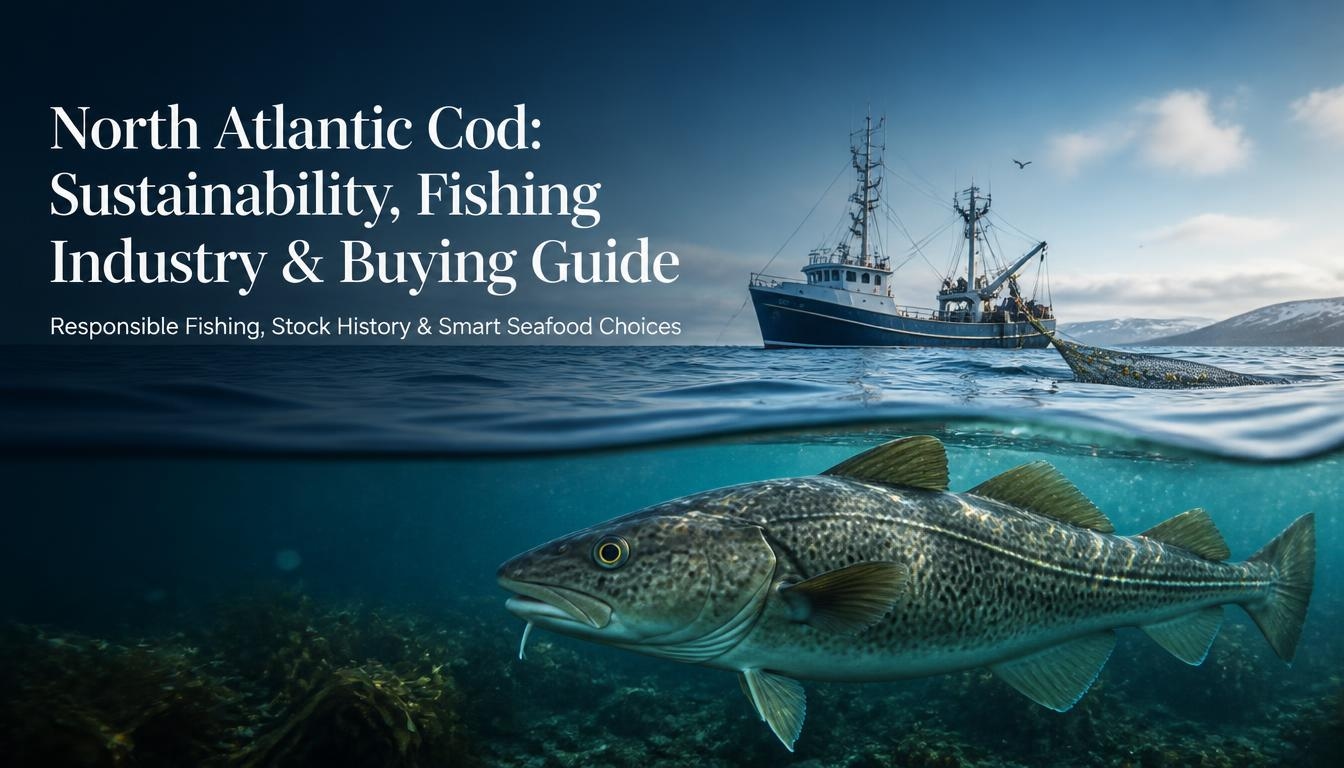
Few fish carry as much industry history as North Atlantic cod. It built entire coastal economies for centuries, then became one of the most cautionary tales in modern fisheries management after stocks in some regions collapsed under sustained overfishing. Today, North Atlantic cod sits in a complicated middle ground: some populations are well managed and thriving, others are still recovering, and buyers are left needing to know the difference. This guide breaks down how Atlantic cod is fished, what's happened to its stocks over time, and how to actually shop for it responsibly.
Why North Atlantic Cod Matters to the Fishing Industry
For hundreds of years, North Atlantic cod was one of the most economically important fish in the world, supporting fishing communities from Newfoundland to Norway. Its abundance, easy preservation through salting and drying, and mild flavor made it a dependable export long before refrigeration existed. Entire regional economies, particularly in Atlantic Canada and Scandinavia, were built substantially around cod fishing.
That historical importance is exactly why what happened next became such a significant case study in fisheries management.
The Cod Collapse: What Happened and Why
In 1992, the Canadian government imposed a moratorium on Northern cod fishing off Newfoundland after stock assessments revealed the population had crashed to roughly 1% of its historical levels. Decades of intense industrial trawling, combined with underestimated fishing quotas and changing ocean conditions, had pushed the stock past its ability to recover naturally. The moratorium put an estimated 30,000 people out of work almost overnight and remains one of the most cited examples of fisheries mismanagement in modern history.
More than three decades later, that particular stock still hasn't fully recovered to pre collapse levels, even with fishing heavily restricted. It's a reminder that cod's fast reproduction rate doesn't automatically protect it from long term damage once a population falls below a critical threshold.
Atlantic Cod Fishing Methods Today
Modern North Atlantic cod fishing generally uses a few main methods:
• Bottom trawling dragging large nets along the seafloor, historically the most common method and the most associated with habitat damage and bycatch
• Longlining setting baited hooks along extended lines, generally considered more selective with lower bycatch rates
• Gillnetting using vertical nets that trap fish by the gills, common in smaller scale coastal fisheries
• Danish seine (anchor seine) a lower impact alternative to trawling used in parts of the North Sea and Nordic fisheries
Which method dominates depends heavily on the region and its regulatory framework, with many well managed fisheries now favoring lower impact gear and stricter quota enforcement compared to decades past.
Which Atlantic Cod Stocks Are Considered Sustainable?
Sustainability status varies considerably by region and isn't something that can be assumed just because a product is labeled "Atlantic cod." Some general patterns worth knowing:
Better Managed Stocks
Fisheries such as Icelandic cod and Northeast Arctic cod (shared between Norway and Russia) are generally regarded as reasonably well managed, supported by consistent quota setting and stock monitoring.
Stocks Still Under Pressure
Certain Gulf of Maine and Georges Bank cod populations remain well below historical targets despite years of restricted fishing, and are frequently flagged by conservation organizations as stocks to approach with more caution.
This regional variation is exactly why the specific origin of a cod product matters more than the species name alone.
How to Buy North Atlantic Cod Responsibly
A few practical steps make it easier to buy Atlantic cod with more confidence:
- Check for a sustainability certification. Labels such as the Marine Stewardship Council (MSC) blue checkmark indicate the fishery has been independently assessed against sustainability standards.
- Look for stated origin. Products labeled with a specific fishery or region (e.g., "Icelandic cod") allow more informed decisions than a generic "Atlantic cod" label with no origin listed.
- Ask about catch method where possible. Longline or Danish seine caught cod is generally associated with lower bycatch than bottom trawled cod.
- Consider frozen at sea options. Cod frozen shortly after catch retains quality well and often comes from more traceable, better documented supply chains.
Frozen vs Fresh: What Buyers Should Know
Frozen North Atlantic cod, particularly products labeled "flash frozen" or "frozen at sea," is often a more reliable choice than fresh fillets of unclear origin, since flash freezing locks in quality shortly after catch and typically comes with clearer supply chain documentation. Fresh cod can still be an excellent choice, but it's worth asking your fishmonger directly about where and how it was caught rather than assuming freshness alone reflects sustainable sourcing.
Frequently Asked Questions
Is North Atlantic cod overfished?
Some stocks are, while others are not. Icelandic and Northeast Arctic cod are generally considered reasonably well managed, while certain Gulf of Maine and Georges Bank stocks remain significantly depleted from historical overfishing.
What caused the North Atlantic cod collapse?
A combination of decades of intensive industrial trawling, fishing quotas that underestimated the true state of the stock, and shifting ocean conditions led to a dramatic population crash, most famously off Newfoundland in the early 1990s.
How do I know if the cod I'm buying is sustainably sourced?
Look for a Marine Stewardship Council (MSC) label or similar certification, and check whether the packaging states a specific fishery or region rather than just "Atlantic cod."
Is frozen cod less sustainable than fresh cod?
Not necessarily. Frozen at sea cod often comes from more traceable supply chains and can be just as sustainable, or more so, than fresh cod of unclear origin.
Are cod populations recovering?
Recovery varies by stock. Well managed populations like Icelandic cod have remained relatively stable, while historically collapsed stocks such as Northern cod off Newfoundland are still recovering slowly, decades after the fishing moratorium began.
Which fishing method is most sustainable for cod?
Longlining and Danish seine methods are generally considered lower impact than bottom trawling, producing less habitat disturbance and lower bycatch rates.
Conclusion
North Atlantic cod's story is really two stories: a fish that built industries for centuries, and a cautionary example of what happens when those industries outpace what a stock can sustain. Buying it responsibly today means paying attention to origin, certification, and catch method rather than treating "Atlantic cod" as a single, uniform product. For more on how seafood choices connect to broader sourcing and health questions, see our guides on "Is Trout Healthy" and "Sockeye Salmon vs Coho," or browse our full Fishing & Seafood Industry section for more on sustainability and sourcing.