
How to Become a Fisheries Biologist: A Step by Step Career Guide
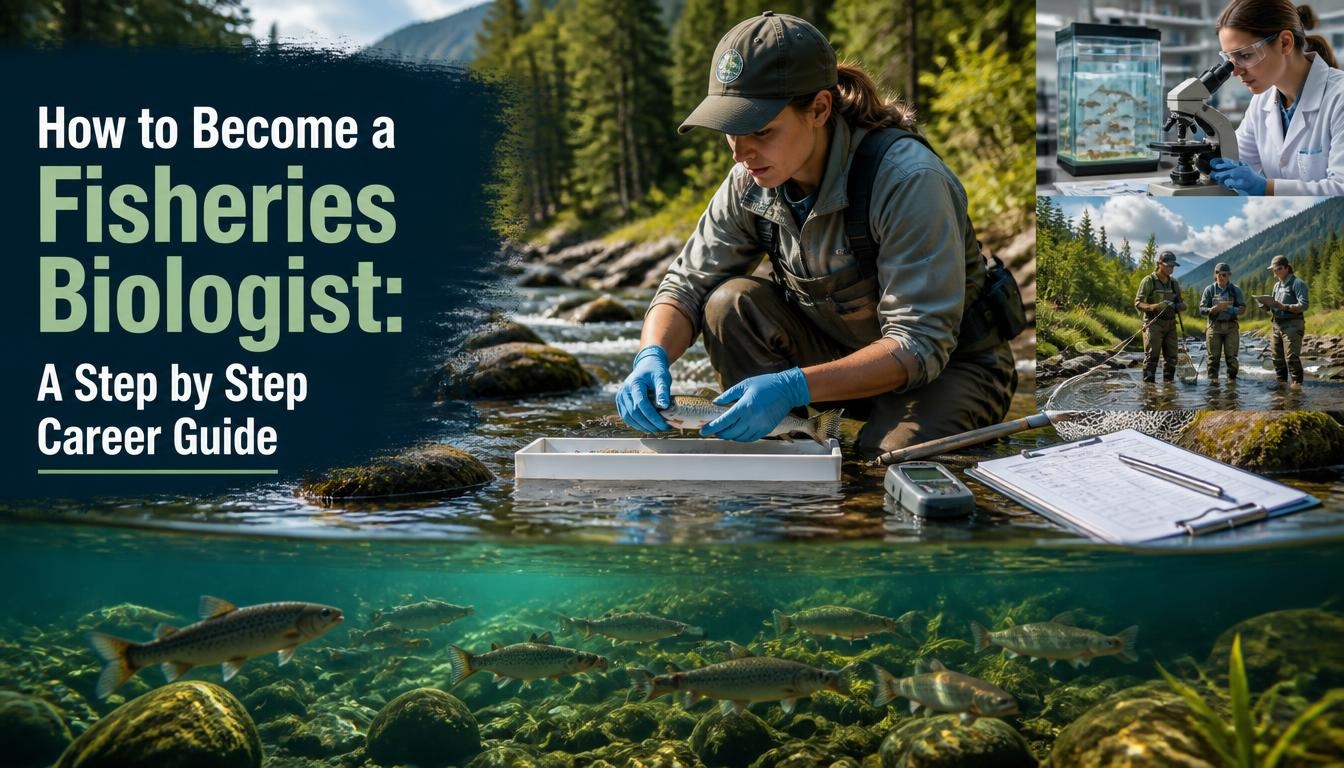
If you'd rather spend your workday knee deep in a river with a data sheet than behind a desk, fisheries biology might be the career you're actually looking for. A fisheries biologist studies fish populations and the ecosystems that support them work that blends fieldwork, lab analysis, and policy influence. This guide breaks down exactly what the job involves, the real path to getting hired, what skills actually matter, and what you can expect to earn.
What Is a Fisheries Biologist, and Is It Right for You?
Fisheries biologists study fish populations, habitat conditions, and aquatic ecosystem health, and use that research to inform fishing regulations, conservation programs, and habitat restoration work. The role sits under the broader umbrella of wildlife biology, but it's distinct from marine biology, which studies ocean life more broadly rather than focusing specifically on fish population science and management.
If you're drawn to fieldwork electrofishing surveys, boat based sampling, tagging studies but also don't mind spending real time on data analysis and technical reports, this career blends both in a way few science jobs do.
The Fastest Path: Step by Step to Becoming a Fisheries Biologist
High School Prep
Solid grades in biology, chemistry, and math set the foundation. Just as valuable: any early hands on exposure, whether that's a school environmental club, volunteer stream monitoring, or simply time spent fishing or observing local waterways it's the fastest way to confirm this career actually fits you before committing years to it.
Bachelor's Degree
A bachelor's degree is the baseline requirement for nearly every entry level fisheries biologist role. Fisheries science, fisheries and aquaculture, wildlife biology, and general biology (with fisheries focused electives) are all viable degree paths. Look specifically for coursework in ichthyology, aquatic ecology, limnology, population dynamics, statistics, and GIS these show up repeatedly in job postings as baseline expectations, not nice to haves.
Field Experience
This is the step people underestimate most. Internships, seasonal technician positions, and volunteer field days with fisheries agencies or conservation groups build the practical skills that classroom work alone doesn't cover and many entry level postings explicitly require prior field experience, not just a degree.
Skills That Actually Matter in the Field
Beyond the degree itself, here's what shows up again and again in real fisheries biologist job requirements:
- Electrofishing and netting techniques safely operating sampling gear to survey fish populations without excessive stress or mortality
- Boat handling many surveys happen from small research vessels, so basic boat operation is a practical necessity, not just a bonus skill
- Species identification fast, accurate ID in the field, often under less than ideal conditions
- Statistics and data analysis turning raw survey data into population estimates and trend reports
- GIS mapping spatial analysis of habitat, range, and population data is now standard across the field
- Scientific diving or SCUBA valuable for certain roles, particularly those involving underwater habitat assessment
Should You Get a Master's Degree?
A bachelor's degree is enough to land many field technician and entry level biologist roles. Where a master's degree becomes necessary is research heavy positions, university affiliated work, and more senior roles within state or federal agencies these frequently list a graduate degree as a hard requirement rather than a preference. Graduate work also opens the door to specialization: fish population modeling, aquatic toxicology, fisheries genetics, and conservation biology are all common graduate focus areas that shape which part of the field you end up in long term.
Getting Certified: The AFS Fisheries Professional Pathway
In the U.S., the American Fisheries Society (AFS) runs the field's main professional certification program, and it's worth understanding even if you're not planning to apply right away. There are two tiers:
- Associate Fisheries Professional (AFP): available once you meet coursework and degree requirements, regardless of work experience. This credential can be held for up to eight years before you need to upgrade.
- Certified Fisheries Professional (CFP/FP C): requires the same academic foundation plus a set number of years of qualifying experience and professional development quality points (PDQPs), with renewal required every five years through continuing education.
Required coursework spans fisheries and aquatic sciences, other biological sciences, physical sciences, math and statistics, communications, and human dimensions of natural resource management. Certification isn't a legal requirement to work as a fisheries biologist the way a license is for law or medicine, but some employers require or strongly prefer it for hiring and promotion, and it's a genuine asset if your career path involves expert testimony or senior agency roles.
Where Fisheries Biologists Actually Work
Employer Type | Typical Focus | Notes |
|---|---|---|
State/provincial agencies | Population surveys, regulation setting | Most common entry point for new graduates |
Federal agencies (e.g., NOAA in the U.S.) | Large scale stock assessments, policy | Often requires more experience or a master's degree |
Environmental consulting firms | Impact assessments, private sector projects | Regulations and project types vary by client/region |
Universities & research institutions | Academic research, publications | Typically requires a master's or PhD |
Aquaculture operations | Fish health, breeding programs, production science | Growing sector, especially in freshwater farming regions |
Salary & Job Outlook
Pay in fisheries biology climbs steadily with experience and specialization. In the U.S., entry level roles typically fall in the roughly $40,000–$55,000 range, while experienced biologists commonly earn $70,000–$100,000, with research and senior agency roles often at the higher end. Fisheries biologists are generally grouped with the broader "Zoologists and Wildlife Biologists" occupational category for labor statistics purposes, and employment growth for that group is projected to be modest over the next decade steady demand, but real competition for open positions, particularly research track roles. Location, employer type, and level of specialization all meaningfully affect where an individual salary lands within that range.
FAQ
What does a fisheries biologist actually do day to day?
Work varies by role but commonly includes fish population surveys, water quality sampling, tagging and tracking studies, data analysis, and writing reports that inform fishing regulations and conservation plans.
What's the difference between a fisheries biologist and a marine biologist?
Fisheries biologists focus specifically on fish populations and fisheries management, often in freshwater and coastal environments, while marine biology covers ocean life more broadly, including species and ecosystems well beyond fish.
Do I need a master's degree to become a fisheries biologist?
Not for entry level and many field based roles a bachelor's degree is enough. Research heavy, university, and senior agency positions frequently require a master's degree or PhD.
How important is field experience compared to grades?
Very. Many employers list prior field experience internships, seasonal technician work, volunteer surveys as a requirement, not just a preference, since it demonstrates practical skills that coursework alone doesn't cover.
Is AFS certification required to work as a fisheries biologist?
No, it's not a legal requirement, but some employers prefer or require it for hiring and promotion, and it can strengthen your credentials for senior or policy facing roles.
What skills matter most beyond the degree itself?
Electrofishing and sampling technique, boat handling, species identification, statistics, and GIS mapping are the skills that show up most consistently across real job postings.
What's the salary range for a fisheries biologist?
Entry level roles typically start around $40,000–$55,000 in the U.S., with experienced biologists earning $70,000–$100,000 or more depending on employer, location, and specialization.
Conclusion
Becoming a fisheries biologist is a clear, buildable path: a relevant bachelor's degree, real field experience, the right technical skills, and depending on where you want your career to go a master's degree and professional certification on top. The field rewards people who genuinely want to be outdoors doing hands on science, not just studying it from a textbook. For a closer look at one part of the broader aquatic science field, see our guide on the science behind pisciculture and fish farming, or browse our Fishing & Seafood Industry section.