
The Ultimate Beginner's Fishing Guide
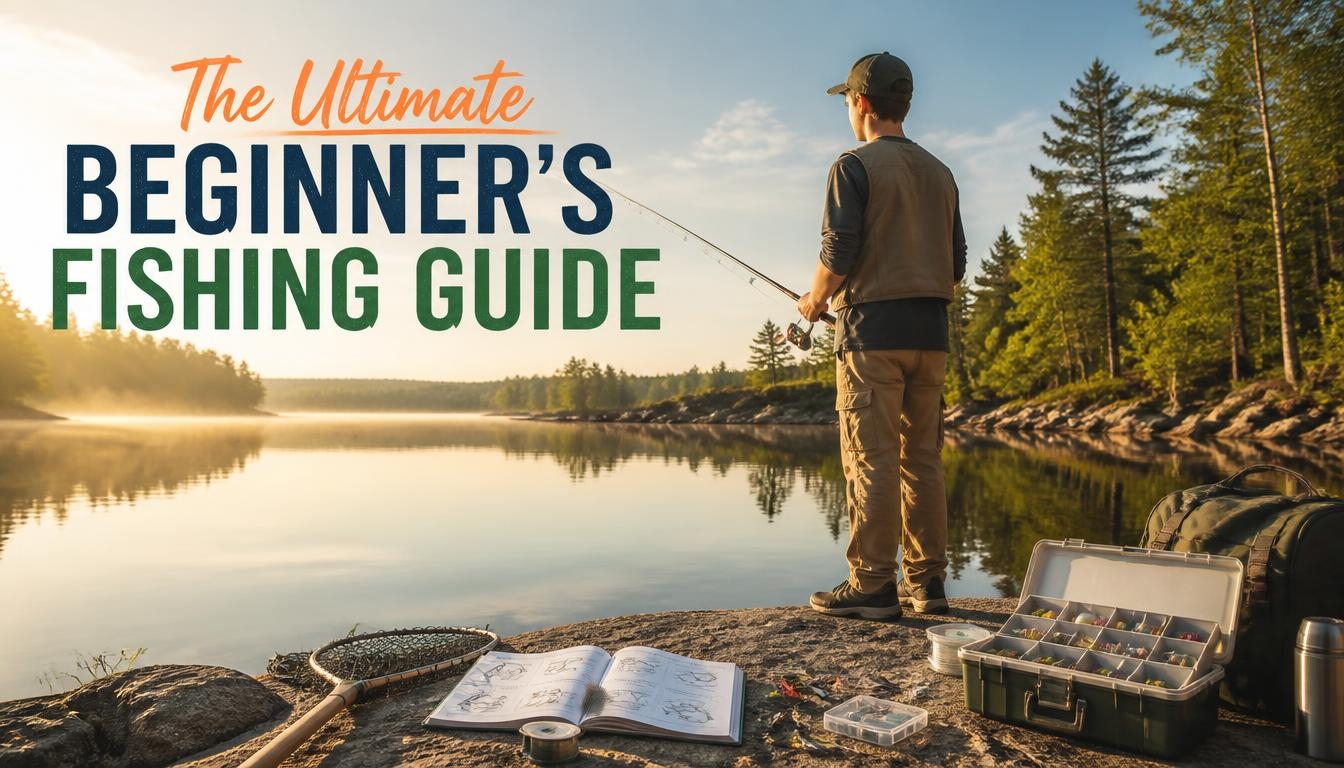
Every experienced angler was once a beginner standing at the water's edge with a rod they didn't quite know how to cast. This fish guide is built for exactly that starting point the gear that actually matters, how to cast without tangling everything, how to read water so you're not fishing blind, two knots you genuinely need, and how to release a fish the right way so it actually survives.
What You Actually Need to Start Fishing: Basic Gear
A beginner setup doesn't need to be complicated or expensive. A medium action spinning rod and reel combo is the standard starting point forgiving to cast, versatile across species, and simple to maintain. Monofilament line is the easiest to handle and tie knots with while you're learning, even though more experienced anglers eventually branch into fluorocarbon or braided line for specific situations. Round out your kit with a basic assortment of hooks, a handful of split shot weights to get bait down to the right depth, and a few bobbers to help you visually detect bites while you're still learning to feel them through the rod.
Learning to Cast: Step by Step
- Open the bail the wire loop on your spinning reel to release the line.
- Pin the line against the rod with your index finger so it doesn't spool out prematurely.
- Bring the rod back smoothly over your shoulder, keeping the motion controlled rather than rushed.
- Snap forward and release your finger at roughly the ten to eleven o'clock position in the rod's arc, letting the line's momentum carry your bait or lure out.
Practice this motion in an open yard or park with just a practice weight no hook before your first real trip. It's the single fastest way to avoid the tangled line frustration that turns off a lot of first timers.
Reading Water Like an Angler
Fish concentrate around specific features rather than spreading evenly across a body of water, and learning to spot those features is one of the highest leverage skills a beginner can build. Structure fallen logs, rock piles, weed beds, docks, and sudden depth changes gives fish cover and ambush points, making these areas far more productive than open, featureless water. Shaded water, particularly during bright midday sun, often holds more active fish than sunny stretches. Current seams and areas where moving water meets still water concentrate food, and fish take advantage of that by holding nearby with minimal effort required to feed.
Detecting Bites & Setting the Hook
Bites range from an obvious, aggressive pull to a barely visible twitch in your line, and telling the difference is mostly a matter of time on the water. Keep your eyes on your line and rod tip, watching for anything unusual sudden tension, slack, or a subtle sideways movement. Once you're confident a fish has actually taken the bait, set the hook with a smooth, firm upward motion rather than a panicked yank an overly aggressive hookset often pulls the hook straight back out before it's had a chance to catch properly.
Two Knots Every Beginner Must Know
You don't need a dozen knots to start fishing two will cover almost everything. The improved clinch knot attaches your hook or lure directly to your line and is the one you'll tie constantly, so it's worth practicing until it's automatic. The Palomar knot is a strong, simple alternative that many beginners find easier to tie correctly under pressure, and it works well for most standard hook and lure attachments. Practice both slowly at home fumbling with an unfamiliar knot while fish are actively biting is one of the most common (and most avoidable) beginner frustrations.
Licenses & Regulations: Don't Skip This Step
Before your first trip, confirm whether the water you're planning to fish requires a license, and check current size and bag limits for the species you're targeting. These rules exist specifically to keep fish populations healthy for future seasons, and regulations frequently vary not just by state or region but by specific water body a lake down the road can carry entirely different rules from the river a few miles away. It's also worth checking whether any species in your area carry special protections or mandatory release requirements before you head out, since unknowingly keeping a protected species is a common and entirely avoidable beginner mistake.
Catch and Release Basics That Actually Keep Fish Alive
Releasing a fish properly takes more care than simply tossing it back, and doing it wrong can kill a fish even when it swims away looking fine. Minimize how long a fish is out of water ideally under 30 seconds for most species and handle it with wet hands rather than dry ones, since dry hands and rough surfaces can strip the protective slime coat that helps prevent infection. Use pliers or a hook removal tool to back the hook out gently rather than yanking it free, and if a fish is hooked deep and the hook won't come out easily, cutting the line close to the hook is often safer for the fish than forcing removal. For fish caught from any real depth, be aware that rapid pressure change can cause barotrauma if a fish's eyes bulge or its stomach protrudes from its mouth, it may need a weighted release device to get back down safely rather than being released at the surface.
FAQ
What gear does a true beginner actually need?
A medium action spinning rod and reel, monofilament line, a basic set of hooks and weights, a few bobbers, and natural bait to start that's genuinely enough for several trips before you need anything more specialized.
Should a beginner start with bait or lures?
Bait, generally. It requires far less technique to be effective, while lures need a convincing retrieve to actually attract fish, which takes more practice to get right.
What's the single most important knot to learn first?
The improved clinch knot, since it's what you'll use to attach hooks and lures to your line on nearly every trip.
How long can I safely keep a fish out of water before releasing it?
Ideally under 30 seconds. The longer a fish is out of water, the lower its odds of surviving after release, even if it appears fine when you let it go.
Do I need a fishing license as a beginner?
In most places, yes and requirements often vary by specific water body, not just by state or region, so always check current local rules before your first trip.
How do I know if I'm actually feeling a bite or just current/wind movement?
It takes practice, but genuine bites usually create a distinct pull, tap, or sudden slack rather than the steady, gradual movement typical of current or wind on your line.
What's barotrauma, and why does it matter for catch and release?
It's rapid pressure change affecting a fish pulled up from deep water, sometimes causing its stomach to push out through its mouth a fish showing these signs often needs a weighted release device to return safely to depth rather than being released at the surface.
Conclusion
Beginner fishing success comes down to a manageable set of fundamentals: simple, reliable gear, a clean cast, reading water for structure and shade, recognizing a real bite, two solid knots, and knowing the license rules before you cast a single line. Add proper catch and release technique, and you're set up not just for a good first trip, but for a long term habit that keeps fisheries healthy for the next angler too. For help identifying exactly what you land, see our guide on how to identify freshwater fish, or browse our Fish Species library.