
Spiny Dogfish Dissection: A Step by Step Guide
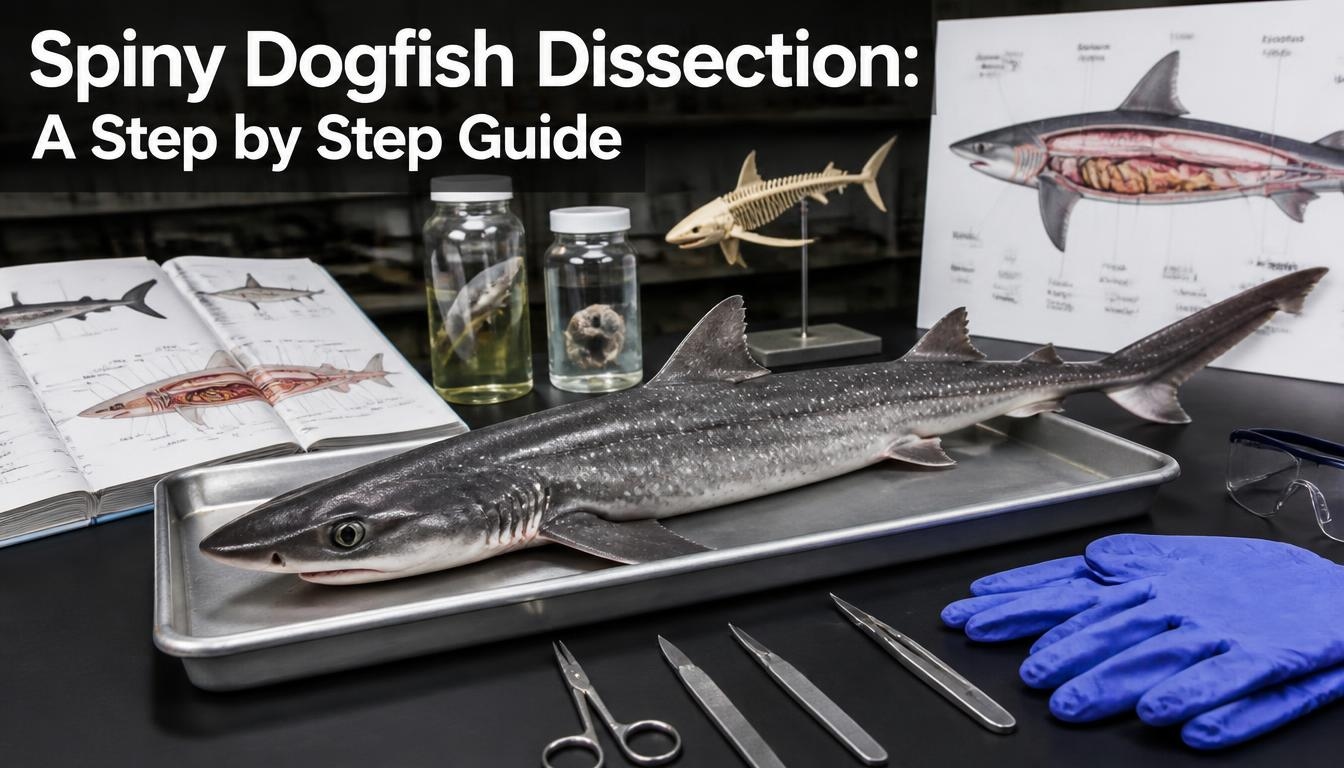
If you've ever pulled a small, spiny shark off the line while bottom fishing, there's a decent chance it was a spiny dogfish and that same species happens to be the standard subject for a classic biology lab: the spiny dogfish dissection. Whether you're prepping for a lab practical or just curious what's actually inside one of the most commonly caught small sharks, this step by step guide covers the full process, from external ID to every major internal organ system.
What You'll Need
A preserved spiny dogfish specimen, a dissection tray, scissors, a scalpel, forceps, dissecting pins, and gloves. Work somewhere well ventilated, since preservative fumes can irritate eyes and airways with extended exposure, and keep the specimen moistened with preservative or water between sessions so it doesn't dry out and stiffen up.
Step 1: Identify External Features First
Before cutting anything, take a few minutes with the external anatomy it orients you for the rest of the dissection and, if you're an angler, it's the same set of features that identify a spiny dogfish on the boat. The name comes from a genuine spine sitting just ahead of each of the two dorsal fins treat this area carefully even on a preserved specimen, since the spines stay sharp. Count the gill slits on the side of the head: spiny dogfish have five, standard for most shark species. Just behind and above each eye, find the spiracle a modified gill opening used to pull water over the gills, especially useful when the shark isn't actively swimming forward. Then check the pelvic fins for claspers: present means male, absent means female the quickest sex ID you'll make in the whole dissection.
Step 2: Make the Initial Incision
With the specimen belly up in the tray, start your incision just in front of the cloaca and cut forward along the midline toward the pectoral girdle, staying shallow enough to avoid puncturing the organs directly beneath the skin and muscle layer. From there, angle two lateral cuts outward toward each pectoral fin, creating flaps you can pin back to fully open the body cavity think of it as opening a book rather than removing a panel.
Step 3: Open Up the Body Cavity
Pin the flaps back and take a look before you touch anything else. The body cavity (coelom) is lined with a thin membrane called the peritoneum, and the first thing you'll likely notice is the liver its large, paired lobes typically dominate the anterior portion of the cavity and are hard to miss.
Step 4: Work Through the Digestive System
Follow the tract from the esophagus (a short tube from the mouth) into the J shaped stomach, then into the small intestine, which leads to the structure that makes shark digestion genuinely distinct: the spiral valve intestine. It's short in overall length but internally lined with a corkscrew shaped fold that dramatically increases the surface area available for nutrient absorption a compact solution that stands in for the long coiled intestines you'd find in most bony fish. While you're in this region, locate the pancreas near the first loop of intestine, the gallbladder (a small greenish sac attached to the liver, storing bile), and note the liver's dual role beyond digestion, it also provides buoyancy, since sharks have no swim bladder.
Step 5: Identify the Circulatory System
The heart sits just anterior to the liver, near the gills, and it's built differently from a typical bony fish heart: four chambers in a row sinus venosus, atrium, ventricle, and conus arteriosus moving blood in one direction toward the gills. Being able to point to each chamber individually, rather than treating the heart as one lump structure, is one of the details most commonly checked in a lab practical.
Step 6: Locate the Reproductive & Urogenital Structures
This is where the sex you identified back in Step 1 actually matters. In females, look for paired ovaries in the anterior body cavity, leading into oviducts that connect to the cloaca; spiny dogfish are ovoviviparous, carrying developing young internally through one of the longest gestation periods of any vertebrate commonly cited between 18 and 24 months. In males, trace the paired testes down to the claspers you already identified externally, used to transfer sperm during mating. Both sexes have paired kidneys running along the back wall of the body cavity as part of the urogenital system.
FAQ
What makes a spiny dogfish's digestive system different from a bony fish's?
Its spiral valve intestine a short section of gut with an internal corkscrew shaped fold that increases absorption surface area, replacing the long coiled intestine typical of bony fish.
How do you tell a spiny dogfish's sex before dissecting?
Check the pelvic fins for claspers present means male, absent means female.
How many gill slits does a spiny dogfish have?
Five, the standard count for most shark species, visible externally along the head.
Why should I be careful around a spiny dogfish's dorsal fins?
Each dorsal fin has a genuine spine in front of it, and these stay sharp even on a preserved specimen the same spines that make live spiny dogfish worth handling carefully if you catch one fishing.
What does the spiracle do?
It's a modified gill slit behind each eye that draws water over the gills, particularly useful when the shark isn't actively swimming forward, such as when resting near the bottom.
How long is a spiny dogfish's gestation period?
Commonly cited between 18 and 24 months, among the longest gestation periods documented in any vertebrate, tied to its ovoviviparous reproduction.
Do sharks have a swim bladder like bony fish?
No instead, a shark's large liver provides buoyancy, which is part of why it's such a prominent structure in the body cavity during dissection.
Conclusion
A spiny dogfish dissection is a genuinely efficient way to see nearly every defining feature of cartilaginous fish anatomy in one specimen a spiral valve replacing a long intestine, a multi chambered heart built for one way blood flow, and a reproductive strategy centered on one of the longest gestation periods in the animal kingdom. Work through the steps in order, and every structure you're likely to be tested on falls into place logically. If you've caught one of these sharks yourself, this same anatomy is exactly what's under the skin next time you're handling one on the boat. For more on identifying fish species you might encounter, browse our Fish Species library.