
Lake Fish 101: Species Every Angler Should Know
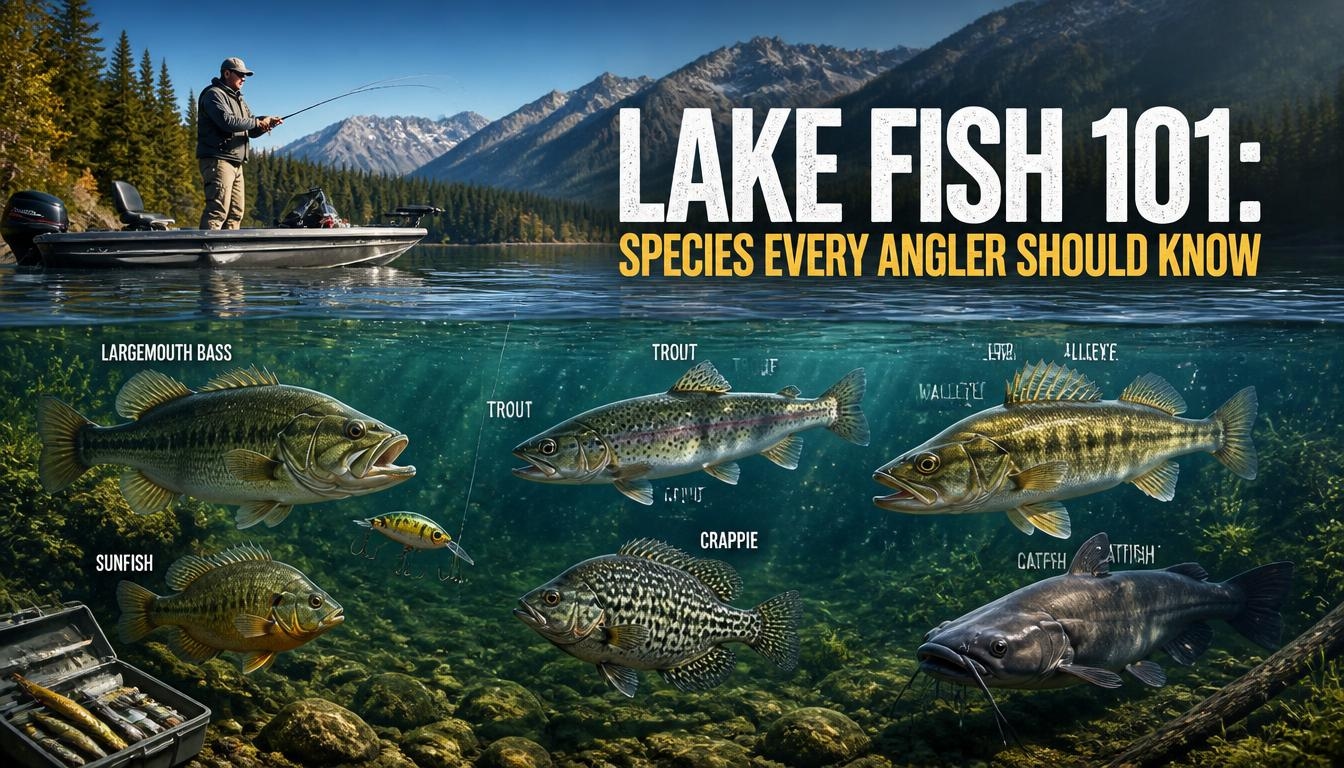
Not every lake fish behaves the same way, and treating them all the same is the fastest way to spend a day getting skunked. Some species hit anything that moves near the surface at dawn; others sit deep and cold and demand patience and the right gear. This guide runs through the lake fish species most anglers actually target, what sets each one apart, and the tackle that actually works.
Picking a Target Species Before You Head Out
Matching your target to your skill level saves a lot of frustration. Aggressive, forgiving species like bluegill and crappie reward simple tackle and patience light approaches, while species like muskellunge or deep lake trout can test even experienced anglers with long stretches between bites.
Bass: The Most Targeted Lake Fish in North America
Largemouth and smallmouth bass dominate freshwater angling for good reason they're widespread, aggressive, and hit everything from live bait to topwater lures. Largemouth bass have an upper jaw extending past the eye and prefer warm, weedy, slower water; smallmouth bass have a jaw ending near the eye, vertical bars instead of a horizontal stripe, and favor cooler, rockier lakes.
The all tackle records back up how special a giant bass really is: the IGFA largemouth bass record has stood since 1932 at 22 lb 4 oz (tied in 2009), and the smallmouth bass record of 11 lb 15 oz has held since 1955 both among the longest standing records in freshwater angling.
Walleye: The Low Light Specialist
Walleye get their name from their large, glassy, reflective eyes, which give them excellent night vision and drive their feeding habits: they're most active at dawn, dusk, and after dark. Look for a white tip on the lower lobe of the tail fin as a quick ID mark, and expect them to hold deeper and cooler than bass on most lakes.
Northern Pike vs. Muskellunge
|
|
|
Body markings | Light spots on dark body | Dark spots or bars on light body |
Tail shape | Rounded lobes | Pointed lobes |
Typical size | 2–15 lbs | 10–40+ lbs |
Behavior | Ambush predator near weeds | Ambush predator, deeper structure |
Both species have teeth sharp enough to cut standard monofilament or fluorocarbon line clean through, so a wire or heavy fluorocarbon leader isn't optional if you're targeting either.
Panfish: Bluegill and Crappie
For anglers just getting started or introducing a kid to fishing bluegill and crappie are the easiest lake fish to catch consistently. Bluegill are small, disc shaped, and show a dark spot near the gill cover; crappie run slightly larger, school around brush piles and docks, and respond well to small jigs or minnows on light tackle.
Lake Trout, Catfish, and Carp
Lake trout live deep in cold, often northern lakes and are identified by pale spots across a dark, forked tail body a favorite target for anglers willing to fish deep structure with downriggers or jigging spoons. Channel catfish, marked by a forked tail and whisker like barbels, feed along the bottom and respond well to cut bait or prepared stink baits. Common carp, found in warm lakes and reservoirs worldwide, have shifted in recent decades from an overlooked "trash fish" to a dedicated target species prized for their size and hard fight on light tackle.
Lake Fish Species at a Glance
|
|
|
|
Largemouth bass | 1–8 lbs | Morning and evening | Beginner friendly |
Smallmouth bass | 1–5 lbs | Morning and evening | Beginner friendly |
Walleye | 1–10 lbs | Dawn, dusk, night | Intermediate |
Northern pike | 2–15 lbs | Overcast days, spring/fall | Intermediate |
Muskellunge | 10–40+ lbs | Fall, low light | Advanced |
Crappie | Under 2 lbs typically | Spring spawning season | Beginner friendly |
Lake trout | 5–20+ lbs | Deep, cold months | Intermediate |
Channel catfish | 2–20 lbs | Night, warm months | Beginner friendly |
FAQs
Bluegill and crappie are generally the best starting point, since they're abundant, bite readily, and don't require specialized tackle or technique.
Check the jawline first: a largemouth bass's upper jaw extends past its eye, while a smallmouth's stops near the eye, and smallmouth also show vertical bars instead of a horizontal stripe.
Walleye feed most actively at dawn, dusk, and overnight, since their large, light sensitive eyes give them an advantage over prey in low light.
Yes both species have teeth sharp enough to cut through standard line, so a wire or heavy fluorocarbon leader is essential.
Increasingly, yes common carp have grown from a once overlooked catch into a dedicated target species valued for their large size and strong fight, especially on lighter tackle.
The IGFA all tackle largemouth bass record of 22 lb 4 oz has stood since 1932 (tied in 2009), making it one of the longest unbroken records in freshwater angling.
Conclusion
Every lake fish species on this list rewards a slightly different approach light tackle and patience for panfish, wire leaders and structure knowledge for pike and muskie, deep gear and cold water for lake trout. Learning to identify what's actually swimming in front of you is the fastest way to start catching more of it.
Curious about the science behind managing lake fisheries? Read our guide to fisheries science, or browse more species in our Fish Species section.