
Florida Freshwater Fish: The Complete Species Guide for Anglers
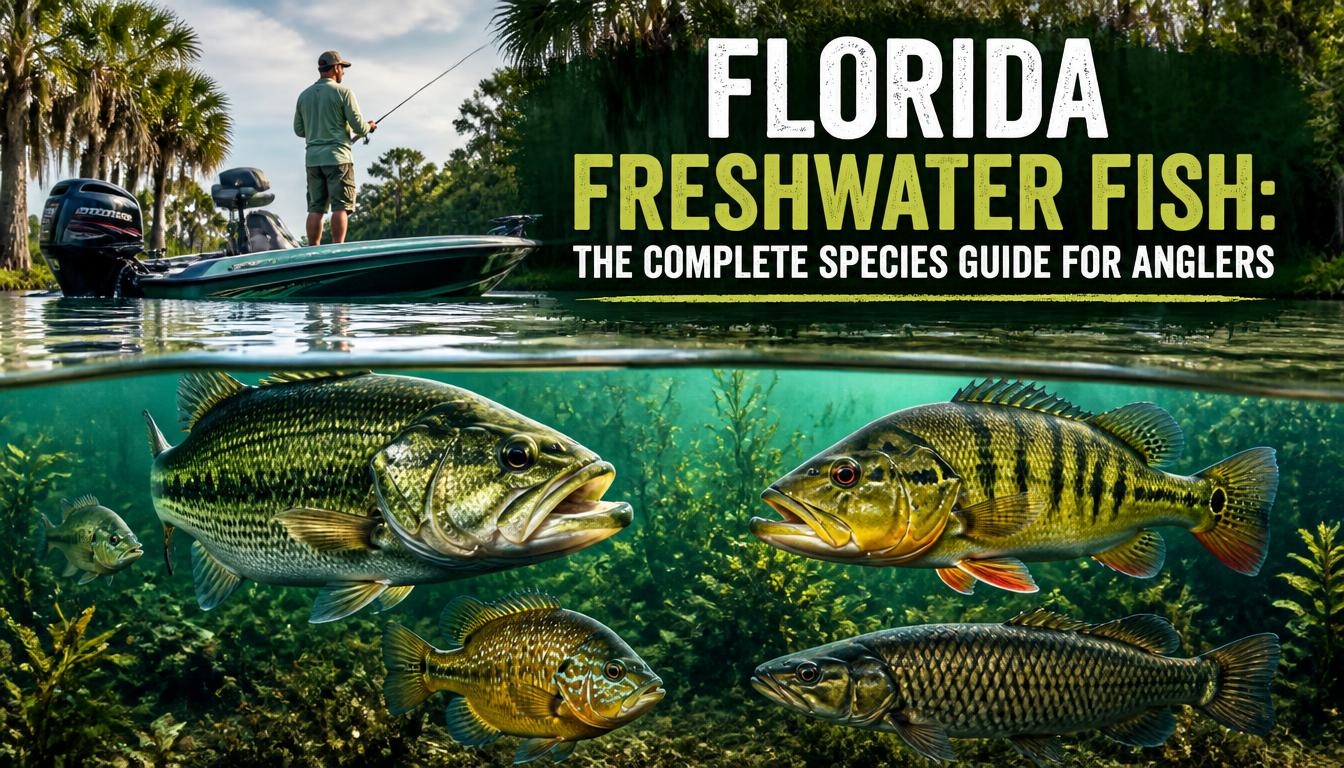
Florida freshwater fishing covers everything from classic bass lakes to South Florida canal systems stocked with fish that look like they escaped from an aquarium because, in a lot of cases, they did. This guide breaks down the major types of Florida freshwater fish you'll actually target, where to find each one, what's changed recently in how they're classified, and which canal dwelling exotics you're required to keep rather than release.
What Is a Florida Freshwater Fish, and Why Does the List Keep Changing?
Florida's freshwater fish community includes native species that have lived in the state's lakes and rivers for millennia, alongside a genuinely unusual set of non native species that have become established, particularly in South Florida's canal network. And in 2024, the list got a real update: the American Fisheries Society, backed by genetic research from Yale University, officially split Florida's signature sport fish into its own species, separate from largemouth bass everywhere else in the country. It's the kind of change anglers should know about even though it doesn't affect a single fishing regulation.
Types of Florida Freshwater Fish You Can Target
Bass
Florida bass what most anglers still casually call "largemouth" is the headline species. As of the 2024 reclassification, Florida bass keeps the scientific name Micropterus salmoides, while largemouth bass elsewhere in the country is now Micropterus nigricans. Florida bass are found throughout most of the state (everywhere except the western panhandle) and are known for growing larger than largemouth bass populations elsewhere part of why Florida remains such a heavily targeted bass fishing destination. Beyond Florida bass, the state also holds spotted bass, shoal bass (native to the Apalachicola River system), Suwannee bass (found mainly in the Suwannee and Santa Fe rivers), and Choctaw bass in panhandle river systems.
Panfish
Bluegill sunfish are the most consistently caught panfish in the state, easy to identify by their black ear flap and aggressive bite. Redear sunfish (shellcrackers) are a close second, favoring snails and other shelled prey. Black crappie rounds out the trio a favorite table fish that schools up in deeper water during cooler months, making winter a prime season to target them.
Catfish & Other Natives
Channel catfish and blue catfish are widely distributed and popular for anglers after a bigger table fish. Florida gar and bowfin both ancient, hardy species often grouped together as "rough fish" by newer anglers put up a surprising fight for their size and are worth targeting on their own. Striped bass and their hybrid, sunshine bass, show up in some rivers and reservoirs and offer a genuinely different fight from typical bass fishing. A handful of federally protected species, including Gulf sturgeon and Atlantic sturgeon, also occur in Florida's rivers these are strictly no take, so know your species before you set the hook in sturgeon habitat.
Florida Canal Fish: The Exotic Species Hiding in Plain Sight
South Florida's canal network cut through Miami Dade and Broward counties for drainage and flood control has become one of the most unusual freshwater fisheries in the country almost by accident. Warm, stable water year round lets tropical species from South America and elsewhere thrive far outside their native range.
The butterfly peacock bass is the star of this ecosystem. Originally from the Amazon and Orinoco basins, it was deliberately introduced into Southeast Florida canals in the 1980s specifically to control invasive spotted tilapia and it's since become one of the most sought after non native sport fish in the state, growing beyond 25 pounds and hitting hard on live shiners or fish shaped lures (it typically ignores plastic worms, unlike Florida bass).
Alongside peacock bass, canal anglers regularly encounter Mayan cichlid, oscar, walking catfish, and multiple tilapia species nearly all originally established through aquarium releases or aquaculture escapes rather than intentional stocking. More recently, bullseye snakehead and clown knifefish have become established in parts of South Florida too, and unlike peacock bass, both are classified as prohibited invasive species.
Comparison: Where to Find Each Species
Species | Best Habitat | Native Status | Season/Notes |
|---|---|---|---|
Florida bass | Lakes, canals, vegetation heavy water | Native | Year round; peaks in cooler months |
Bluegill sunfish | Lakes, ponds, canals | Native | Year round, easiest to catch consistently |
Black crappie | Deeper lake/river water | Native | Best in cooler winter months |
Channel/blue catfish | Rivers, lakes | Native | Year round, especially at night |
Butterfly peacock bass | South Florida canals | Non native (introduced) | Most active in bright daylight |
Bullseye snakehead | South Florida canals | Non native (invasive) | Must not be released if caught |
Bait & Tackle by Species
Florida bass respond well to soft plastic worms, spinnerbaits, and topwater lures around vegetation and structure. Bluegill and other panfish are most reliably caught on crickets or small worms, while black crappie tend to favor minnows or small jigs fished slowly near deeper cover. Catfish respond well to cut bait or prepared stink baits fished on the bottom. For butterfly peacock bass specifically, live shiners or bright, fish shaped lures work far better than the soft plastics that dominate Florida bass fishing a good reminder that canal fishing sometimes calls for a different approach than lake fishing for native species.
What You Can Keep vs What You Must Not Release
Regulations differ sharply depending on whether a species is native, an established non native sport fish, or a prohibited invasive species. Native species like Florida bass, panfish, and catfish are managed with standard bag and size limits set by the Florida Fish and Wildlife Conservation Commission (FWC). Butterfly peacock bass has its own specific catch limits, and FWC actively encourages releasing individuals over 17 inches to keep the population doing its original job of controlling invasive tilapia. Prohibited invasive species bullseye snakehead chief among them must never be released if caught; keeping and disposing of them (rather than throwing them back) is part of managing their spread. Always confirm current rules for your specific water body before heading out, since regulations can vary by lake and by region.
FAQ
What's the biggest change to Florida freshwater fishing recently?
In 2024, the American Fisheries Society officially recognized Florida bass as a separate species from largemouth bass, based on genetic research. Florida bass kept the scientific name Micropterus salmoides, while largemouth bass elsewhere is now Micropterus nigricans though no fishing regulations changed as a result.
What fish can you catch in Florida's canals?
Canal systems in South Florida hold butterfly peacock bass, Mayan cichlid, oscar, walking catfish, multiple tilapia species, and more recently bullseye snakehead and clown knifefish, alongside native species like Florida bass and catfish.
Do I have to release a snakehead if I catch one in Florida?
No the opposite. Bullseye snakehead is a prohibited invasive species, meaning you must not release it back into the water if caught.
What's the most reliable Florida freshwater fish to catch for beginners?
Bluegill sunfish, since they're abundant, aggressive biters, and respond well to simple bait like crickets or worms.
Why is the butterfly peacock bass in Florida at all?
The FWC intentionally introduced it into Southeast Florida canals in the 1980s to help control populations of invasive spotted tilapia, and it's since become a popular sport fish in its own right.
What bait works best for peacock bass versus Florida bass?
Peacock bass respond better to live shiners or bright fish shaped lures, while Florida bass are more reliably caught on soft plastic worms, spinnerbaits, and topwater lures.
Are there any fish in Florida you can't legally target at all?
Federally protected species like Gulf sturgeon and Atlantic sturgeon are strictly no take in Florida's rivers, separate from the state level catch rules covering sport fish.
Conclusion
Florida freshwater fishing means juggling two very different fisheries in one state a native lake and river system built around Florida bass, panfish, and catfish, and a strange, thriving canal ecosystem full of tropical exotics most anglers never expect to find outside an aquarium. Know which species you're targeting, know the 2024 naming change, and know which canal fish you're required to keep rather than release, and you'll be fishing Florida's waters with a real edge. For a broader look at how species get classified in the first place, see our guide on what fisheries science actually studies, or browse our Fish Species library.