
Fatty Fish in Pakistan: Best Omega-3 Rich Species to Eat
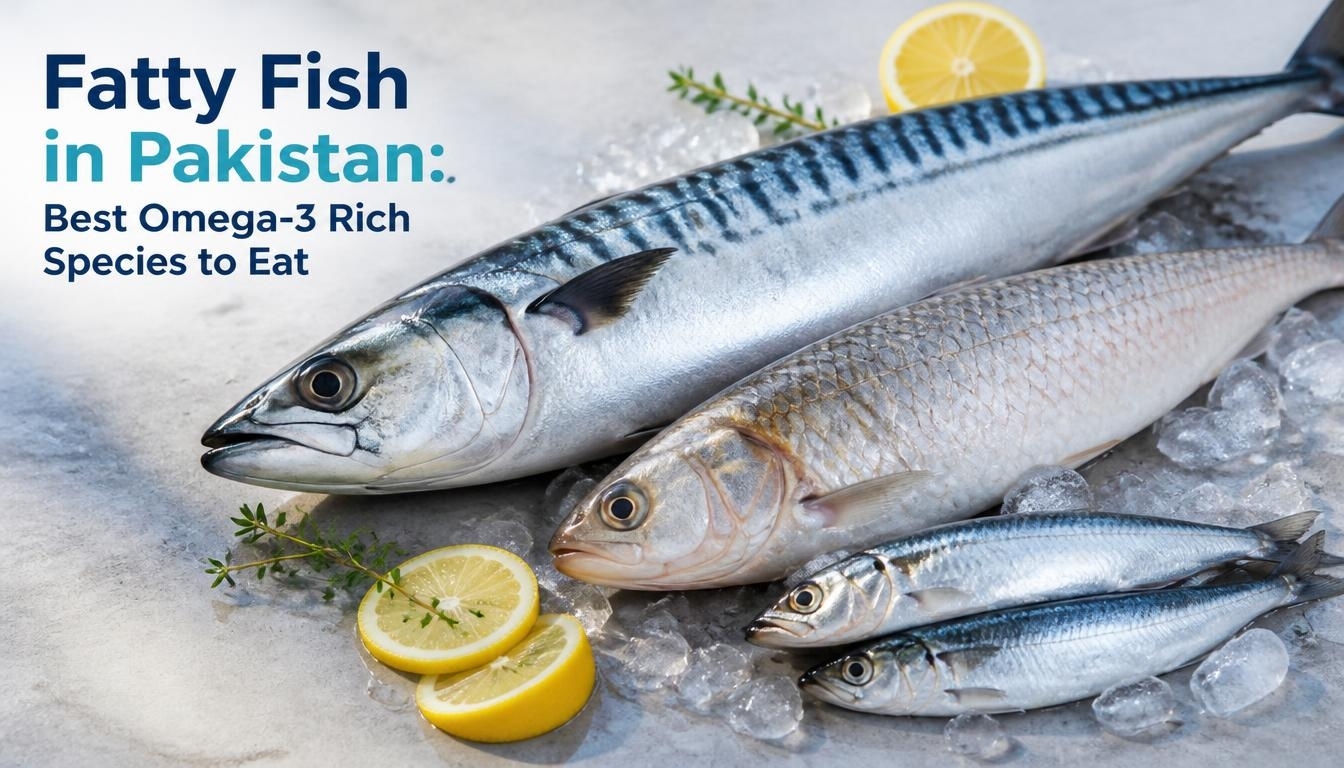
If you want more omega 3 in your diet, Pakistan’s waters offer plenty of choices. Fatty fish in Pakistan, such as mackerel, hilsa, and sardines, are some of the best sources of the omega 3 fats EPA and DHA, and Karachi’s markets stock many of them. This guide covers which species stand out, where to find them, and how to eat them. For the full nutrition picture, see our guide to fish meat nutrition facts and omega 3 benefits.
What Counts as Fatty Fish?
Fatty fish, also called oily fish, hold more oil in their flesh than lean white fish, and much of that oil is omega 3. Most fish are low in fat overall, generally under five per cent, and a good share of that fat is omega 3. Oily fish such as sardines and tuna are often named as ideal sources. Omega 3 matters because the body cannot make it on its own, so it has to come from food. You can read more in our guide to fatty fish and omega 3 fatty acid benefits.
Omega 3 levels are not fixed. They vary with the species, the season, and the waters where the fish was caught.
Fatty Fish in Pakistan: Best Omega 3 Rich Species
These are the main omega 3 fish in Pakistan to look for:
• Indian mackerel: Commonly harvested in the shallow waters along Pakistan’s coast and an important commercial catch. A Pakistani study of its seasonal changes found EPA and DHA were lowest in July and highest from November to March. Mackerel from the Karachi coast has also been found to be rich in omega 3.
• Hilsa (palla): An oily fish known for its omega 3 content. In Pakistan most hilsa is caught around the Indus delta in Sindh, where it is called palla.
• Sardines: A classic oily fish, and Indian oil sardine has historically been among the largest groups in Pakistan’s marine catch.
• Black pomfret: Research on fish from Karachi’s coastal waters found black pomfret to be rich in omega 3. White pomfret also contains it but is a leaner fish.
• Tuna: Tuna species such as kawakawa are landed in Pakistani waters, and tuna is widely cited as an oily fish.
• Rainbow trout: A cold water fish found in the north of the country and another well known omega 3 source. Read more on whether trout is healthy.
Omega 3 levels differ from one species to the next, so it helps to compare them. For a wider look at taste and nutrition across popular species, see the best fish in Pakistan.
Best Sea Food in Karachi: Where to Find and How to Eat Fatty Fish
Karachi is the easiest place in the country to find fatty fish, and the best sea food in Karachi usually comes from the fish harbour, local markets, and seafood restaurants. Among the famous fish in Karachi, mackerel and sardines are the oily ones to look for, while pomfret is prized for its taste. If you want the best fish in Karachi for omega 3, ask for fresh mackerel or sardines, especially in winter. Fish tikka in Karachi is a popular way to enjoy fish at barbecue and seafood restaurants, but not every fish used for tikka is an oily one, so ask which fish it is made from.
• Check freshness: Oily fish spoil faster, so look for clear eyes, red gills, and firm flesh, and ask when the catch came in.
• Shop in season: Mackerel is reported to carry the most omega 3 between November and March, so winter is a good time to buy it.
• Cook it gently: Grilling, baking, and steaming keep the fish lighter. Deep frying adds extra oil and calories.
• Mix it up: Rotate between mackerel, sardines, hilsa, and other species rather than eating the same fish every time.
• Fish or capsules: If you do not eat fish, you can look at omega 3 capsules in Pakistan, though whole fish also gives you protein and other nutrients.
• Do not overdo it: Health advice commonly suggests eating fish at least twice a week, but very high omega 3 intake can thin the blood.
Frequently Asked Questions About Fatty Fish in Pakistan
Which fish are high in omega 3?
Oily fish such as mackerel, hilsa, and sardines are among the best sources of omega 3, and black pomfret also contains good amounts. Levels vary by season and location, and Indian mackerel tends to be richest from November to March.
What fatty fish are available in Pakistan?
The main fatty fish in Pakistan include Indian mackerel, hilsa (palla), sardines, black pomfret, and tuna from coastal waters, plus rainbow trout in the colder northern areas. Availability depends on the season and the market, and Karachi markets are a good place to start.
How often should you eat fatty fish?
Health advice commonly suggests about two fish meals a week, and oily fish can be part of that. If you take blood thinners or have a health condition, ask your doctor before changing how much fish you eat.
Is eating fish better than taking omega 3 capsules?
For most people, eating fish is a good first choice because you get protein, vitamins, and minerals along with omega 3. Capsules can help people who do not eat fish, but doses and quality vary, so talk to your doctor or pharmacist before starting them.
Are fatty fish high in mercury?
It depends on the species. Large, long lived predatory fish such as shark, king mackerel, and large tuna tend to carry more mercury, while smaller oily fish such as sardines generally carry less. Pregnant women and young children should follow medical advice on which fish to eat and how often.
Conclusion: Make Fatty Fish a Regular Part of Your Plate
Fatty fish in Pakistan give you plenty of ways to add omega 3 to your meals. Start with fresh mackerel in winter, try hilsa and sardines for variety, and cook them gently. Buy fresh, rotate your choices, and enjoy fish as part of a balanced diet.
Next step: wondering whether fish can support your goals? Read our guide on fish and weight loss.