
Endangered Aquatic Animals: Species at Risk Right Now
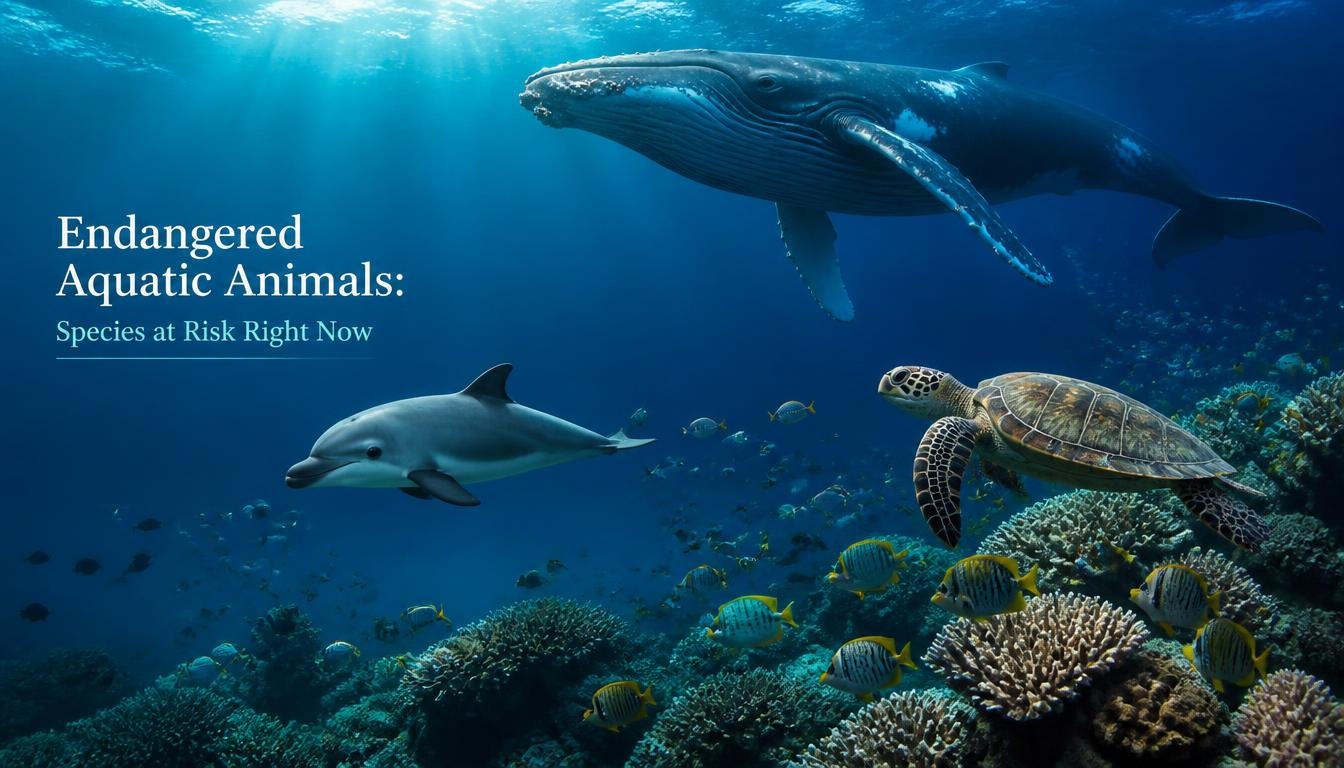
It's easy to picture an endangered species as something on land a rhino, a tiger, a panda. But some of the most endangered aquatic animals in the world live entirely underwater, out of view, which is exactly why so few people know how close some of them are to disappearing for good. From a porpoise with only a handful of individuals left to fish that have gone extinct in the last few years, here's a look at the endangered water species most at risk right now, and why.
Why Endangered Water Species Are Often Overlooked
Unlike a deforested hillside, a collapsing fish population is invisible from the surface which means aquatic species can decline for decades before anyone notices. A recent large scale assessment found that close to a quarter of the world's freshwater fish, along with freshwater crabs, crayfish, and dragonflies, are now at high risk of extinction. Ocean species face similar pressure: hundreds of shark and ray species alone have been classified as endangered, critically endangered, or vulnerable in recent global assessments.
Fish and Aquatic Animals Closest to Extinction
A few species stand out as some of the most at risk fish and aquatic animals on record:
- Vaquita Found only in Mexico's Gulf of California, this small porpoise's population has fallen to a small handful of individuals, making it arguably the most endangered marine mammal alive.
- Chinese Paddlefish Once one of the largest freshwater fish species in the world, formally declared extinct after no confirmed sightings in decades a fish that went from abundant to gone within a few human lifetimes.
- European Eel Populations have dropped by roughly 95% in parts of the UK over the past 25 years, driven by overfishing, habitat fragmentation, and demand for eel as food.
- Totoaba A large fish targeted for its swim bladder, critically endangered in its own right and closely tied to the vaquita's decline through illegal net bycatch.
- Sturgeon Species (including Beluga) Decades of overharvesting for caviar, combined with dams blocking spawning migrations, have pushed multiple sturgeon species to critically endangered status.
- Oceanic Whitetip Shark Formerly one of the most abundant pelagic sharks, now critically endangered, part of a broader pattern where roughly a third of all assessed shark and ray species are classified as endangered or vulnerable.
- Hawaiian Monk Seal With only a few hundred individuals remaining, this seal faces threats from fishing gear entanglement, limited food availability, and habitat loss.
What's Pushing These Species Toward Extinction
The specific threats vary, but a handful of causes show up again and again across almost every fish endangered today: bycatch in gear targeting other species, overharvesting for a single body part (fins, swim bladders, roe), habitat loss from dams and coastal development, and pollution. Climate change compounds all of it by shifting water temperatures faster than some species can relocate or adapt.
Signs of Recovery Worth Watching
Not every trend line points downward. Several fish and marine mammal populations have stabilized or grown once bycatch was reduced, habitat was restored, or catch limits were enforced consistently over time. The pace of recovery depends heavily on biology fast breeding species can rebound within a decade under real protection, while slow growing species like sturgeon or sharks may need decades of sustained effort before population numbers meaningfully shift.
FAQ
Which fish are considered almost extinct right now?
Species like the totoaba, several sturgeon species, and the European eel are considered critically endangered, while the Chinese paddlefish has already been declared extinct.
Is the vaquita really the most endangered aquatic animal?
It's widely regarded as one of the most endangered, if not the most endangered, marine mammal in the world, with a population reduced to a small handful of individuals in Mexico's Gulf of California.
Are freshwater fish as endangered as ocean fish?
Yes recent assessments put roughly a quarter of the world's freshwater fish at high risk of extinction, a rate on par with many ocean species.
What can actually help endangered water species recover?
Reducing bycatch, restoring habitat like spawning grounds, and enforcing catch limits based on real population data have all helped some species recover, though timelines vary widely by species.
Conclusion
The list of endangered aquatic animals is longer, and growing faster, than most people realize precisely because so much of the decline happens out of sight. From a nearly gone porpoise to a fish already declared extinct, these species are a reminder that ocean and freshwater ecosystems need the same attention land based conservation gets. Want a closer look at a specific endangered water species? Reach out and we'll dig into it.