
About Fisheries 101: What Every Beginner Needs to Know
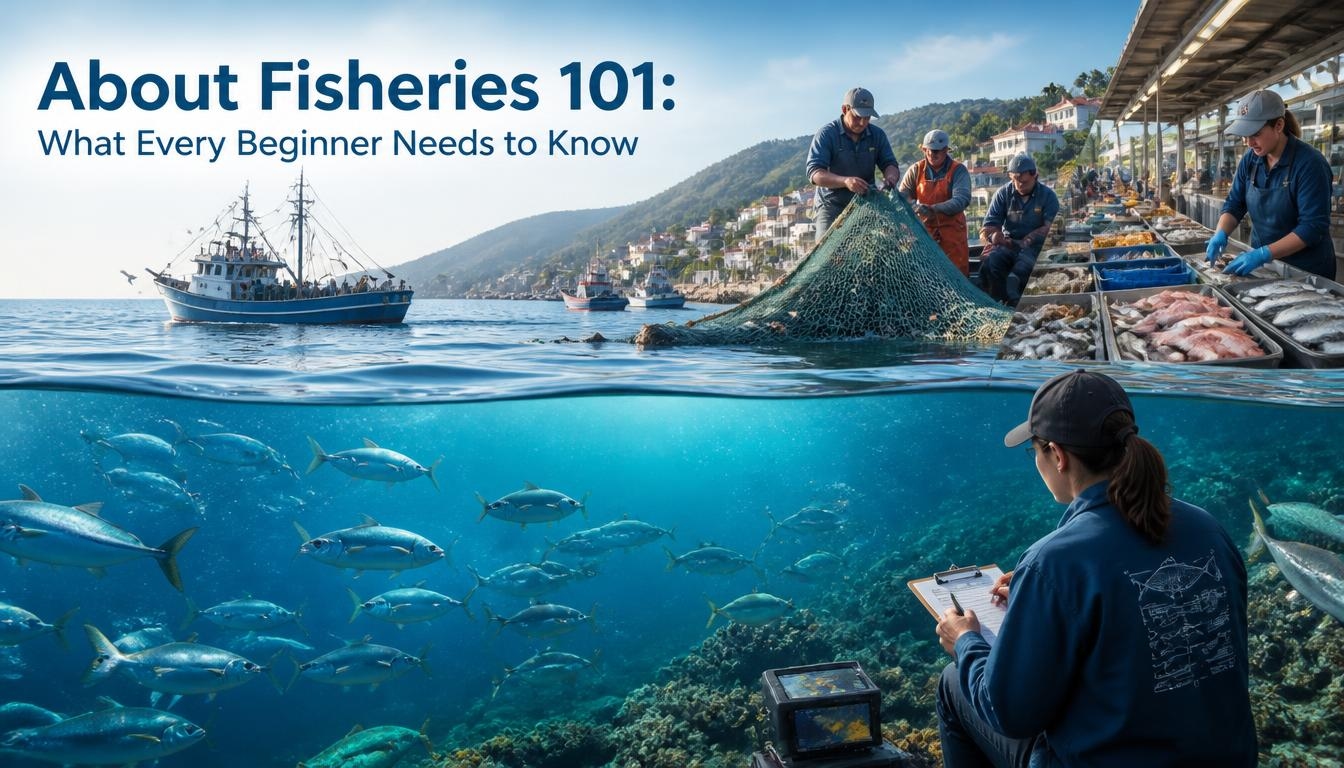
Search "fisheries" online and you'll get a flood of technical reports, government policy pages, and academic jargon. If you're just trying to understand the basics, that's more overwhelming than helpful. This guide strips fisheries science down to what actually matters for a beginner what it is, what people who work in it do, and why it shapes the seafood you eat.
So, What Exactly Is Fisheries Science?
At its core, fisheries science is the study of fish populations and everything connected to them biology, habitat, harvesting, and the people who depend on that harvest for a living. Think of it as the science behind the question: "How do we keep catching fish without running out of them?"
Anyone reading up about fisheries for the first time will notice it's less about individual fish and more about systems entire populations, ecosystems, and the industries built around them, from small coastal boats to large scale aquaculture operations.
The Building Blocks of a Fishery
A "fishery" isn't just a place where fishing happens. It's a combination of four things:
- The species being harvested (a specific fish, shellfish, or other aquatic animal)
- The location a river, lake, or stretch of ocean
- The people involved fishers, farmers, processors, and regulators
- The rules that govern how much can be caught, when, and how
Change any one of these and you've essentially described a different fishery, even if it's technically the same body of water.
Fishery Activities You Should Know About
Fishery activities cover a wider range of work than most beginners expect. Depending on the region, a fishery might involve:
- Wild capture commercial or small scale fishing in open water
- Aquaculture farming fish, shrimp, or shellfish in controlled environments
- Stock assessment scientists surveying populations to estimate sustainable catch limits
- Processing and distribution turning a catch into packaged, market ready seafood
- Regulation and enforcement setting and policing catch limits, gear rules, and protected seasons
Each activity plugs into the others. A stock assessment that finds a species is being overfished can directly change what fishers are legally allowed to catch the following season.
Fisheries and Fishing Aren't the Same Thing
This trips up a lot of beginners: fisheries and fishing sound like the same topic, but they describe different scopes. Fishing is the physical activity casting a line, setting a net, hauling in a catch. A fishery is the entire managed system around that activity: the species, the data, the regulations, and the economics.
So when a report talks about "the decline of a fishery," it's not just saying fewer people are fishing it's describing a drop in the fish population itself, along with everything downstream of that (fewer jobs, less seafood supply, tighter regulations).
Why This Field Is Bigger Than You'd Think
Fisheries science touches far more than most people assume fishery science, and more broadly the seafood economy it supports, connects to nutrition, trade policy, climate research, and rural employment. A few examples:
- Food security seafood is a primary protein source for a large share of the world's population
- Employment millions of people work directly or indirectly in capture fisheries and aquaculture worldwide
- Trade seafood is one of the most heavily traded food commodities globally
- Environmental health fish populations are a strong indicator of how healthy a river, lake, or ocean ecosystem actually is
Because of this reach, fisheries science overlaps with careers in marine biology, environmental policy, food safety, and even data science (population modeling relies heavily on statistics).
FAQs
1. What's the easiest way to describe fisheries science?
It's the study of fish populations and the human activities fishing, farming, and regulation built around harvesting them sustainably.
2. Do I need a science background to work in fisheries?
Not necessarily. The field includes research and biology roles, but also policy, management, data analysis, and industry/business positions that don't require a hard science degree.
3. What's the difference between a fishery and fishing?
Fishing is the act of catching fish. A fishery is the broader system species, location, people, and regulations surrounding that catching activity.
4. Why do fisheries need regulation at all?
Fish populations can be caught faster than they reproduce. Regulation catch limits, seasons, gear restrictions exists to prevent that from happening.
5. Is aquaculture part of fisheries science?
Yes. Aquaculture, or fish farming, is one of the two major branches of fisheries science, alongside wild capture fisheries.
Wrapping Up
Fisheries science isn't just for marine biologists it's the framework behind a huge chunk of the world's food supply, trade, and coastal economies. Once you understand the basic building blocks species, location, people, and rules the rest of the field starts to make a lot more sense.
Curious about the industry side of things? Check out our Fishing & Seafood Industry guides for more on how fisheries operate around the world.